
Andy and I were up bright and early at the hostel in Tarbert with two missions in mind. One, to rendezvous with members of the Hebrides MRT in Stornoway at 6pm. And two, between now and then, to visit as many iconic spots on North Harris and Lewis as possible!
Rain was forecast for 5pm, but until then it was looking bright and sunny. I was really pleased that Andy would be getting the best possible introduction to the Outer Hebrides as the weather can be seriously wild and depressing at times.
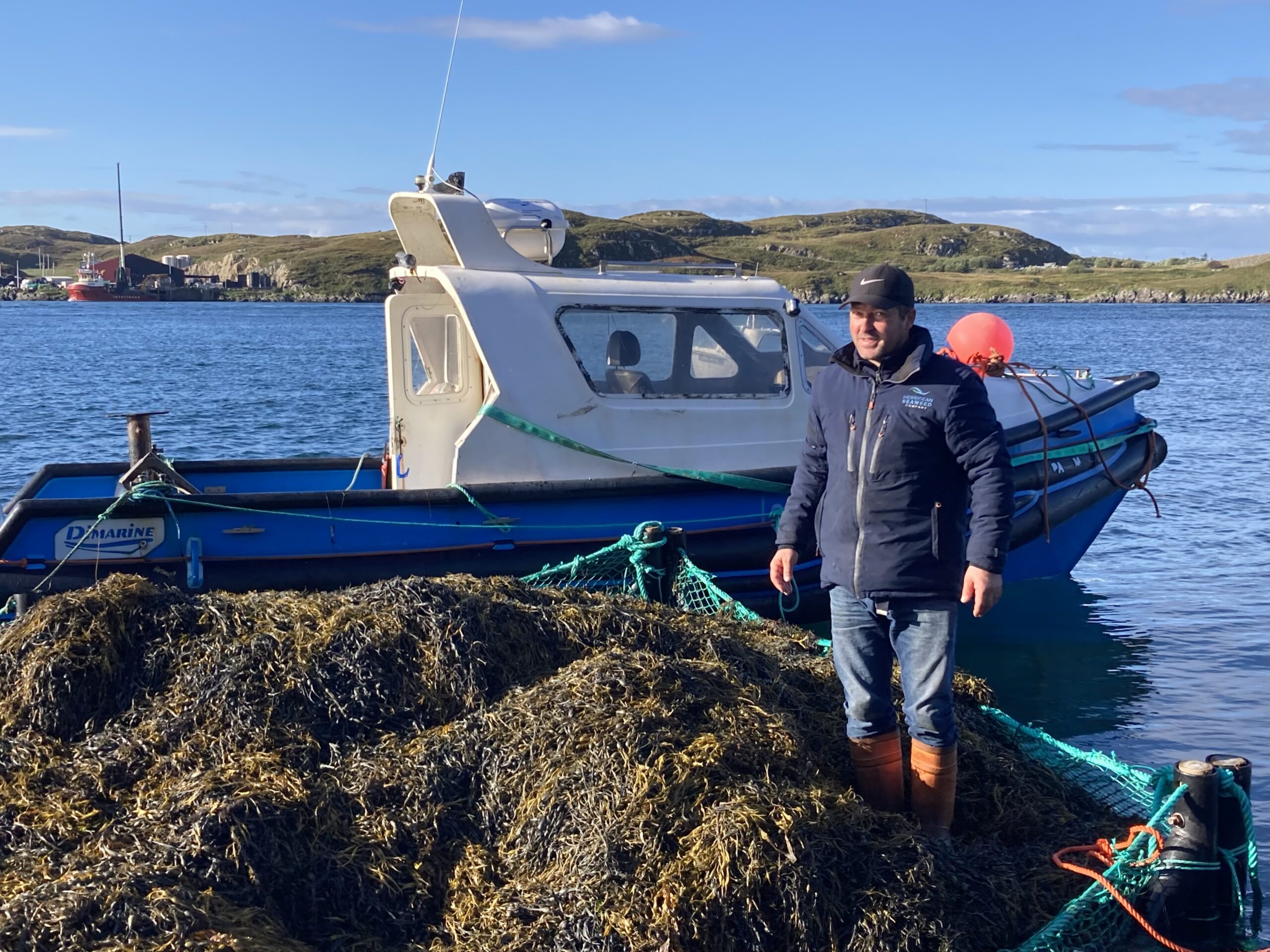
We initially headed to the island of Scalpay which is now joined to Harris by a modern bridge. As we approached the bridge we were puzzled by the sight of a small vessel towing a strange bale of floating vegetation. All was revealed when the boat docked at a slipway under the bridge where we were taking photos. We then met Kenny who explained that the bale was comprised of seaweed which would be liquidised and sold worldwide as plant feed, particularly for citrus fruit.
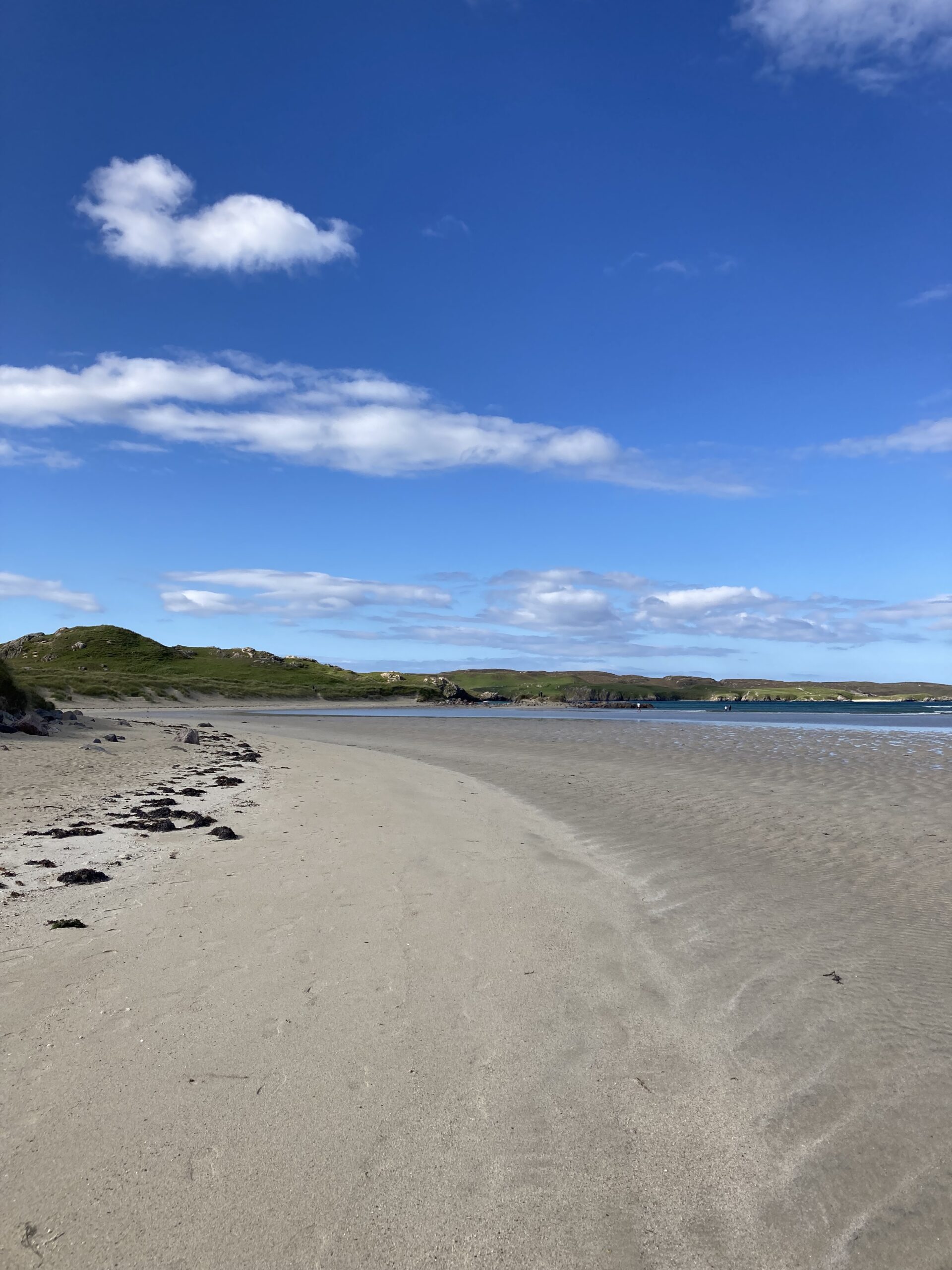
Next task was to ride through the stunning mountains of North Harris over the ‘border’ and into Lewis. We passed the highest peak, An Clisham, which I remember climbing about eight years ago. After about thirty miles on fast yet quiet roads we turned South West and headed into the remote area where Uig is located. Concentration is key to getting where you want to go on the single track roads of Scotland. Gravel, sheep, sharp bends and big drops are features of many. But soon we were approaching the magnificent Uig estuary and its wild beach facing out into the Atlantic.
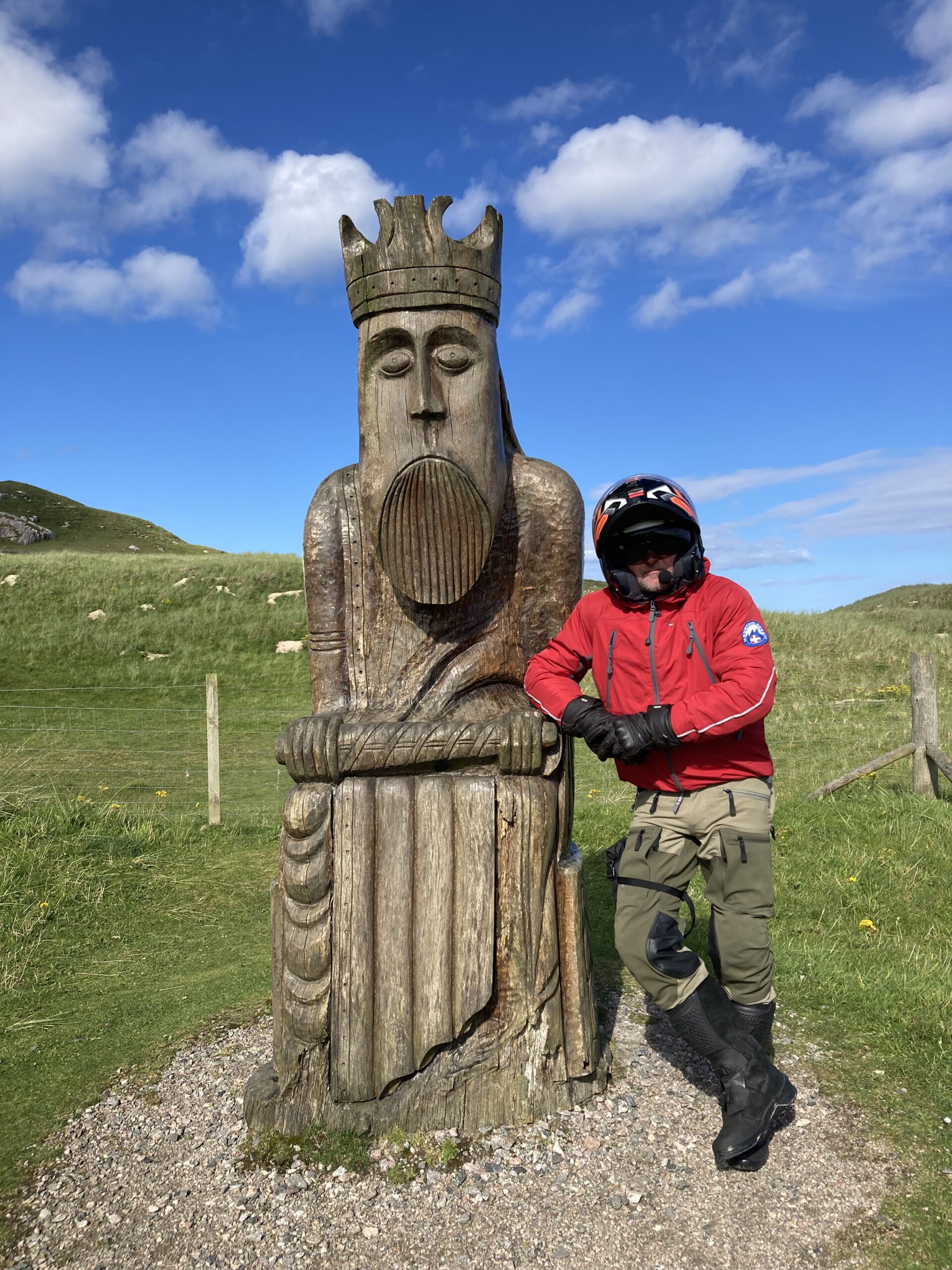
It’s near here that the famous Lewis chessmen were discovered in 1831. This distinctive set of chess pieces were carved from Walrus ivory in the 12th century and most of the originals are now housed in the British Museum. There are various massive replicas and carvings dotted around for us tourists to get selfies with!
Close to Uig is the Abhainn Dearg distillery which was established in 2008 by Mark Tayburn and produces the first legal whisky in the Outer Hebrides for almost two hundred years. This is the most Westerly of all the Scottish distilleries and we paid it a quick visit.
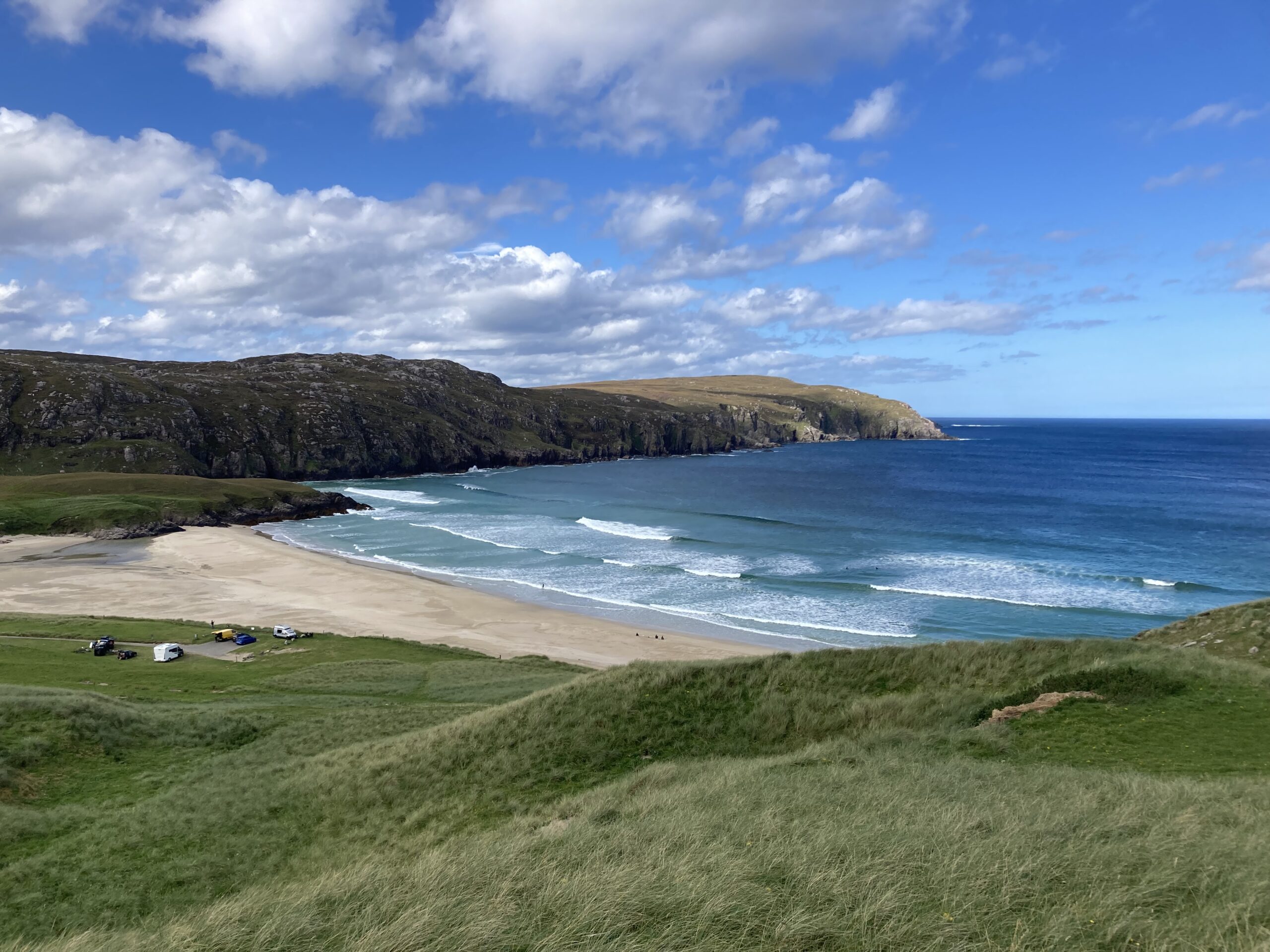
We rode the narrow coast road around the Valtos and Kneep headland where Lizzie and I have stayed several times. The beaches here are reminiscent of the Caribbean and the machair grassland is home to beautiful and often rare wild flowers.
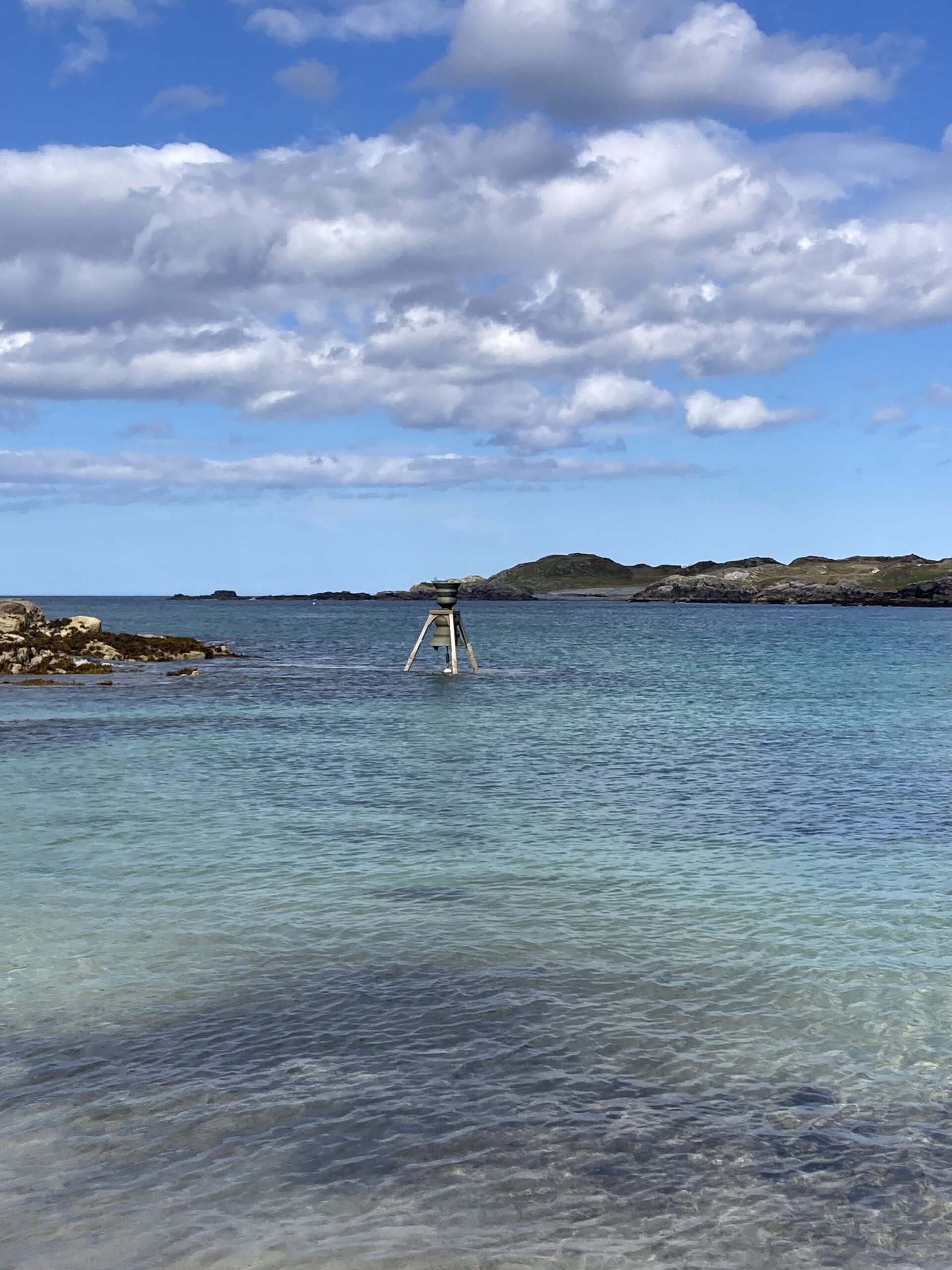
I really wanted to visit the island of Great Bernera and as the weather was playing nicely, we detoured over the bridge linking it to Lewis and headed to Bostadh which is home to the site of a Bronze Age village and rebuilt dwelling. There’s also a fine beach with a strange semi submerged ‘tidal bell’ which was sculpted by Marcus Vergette and Neil McLachlan in 2010.
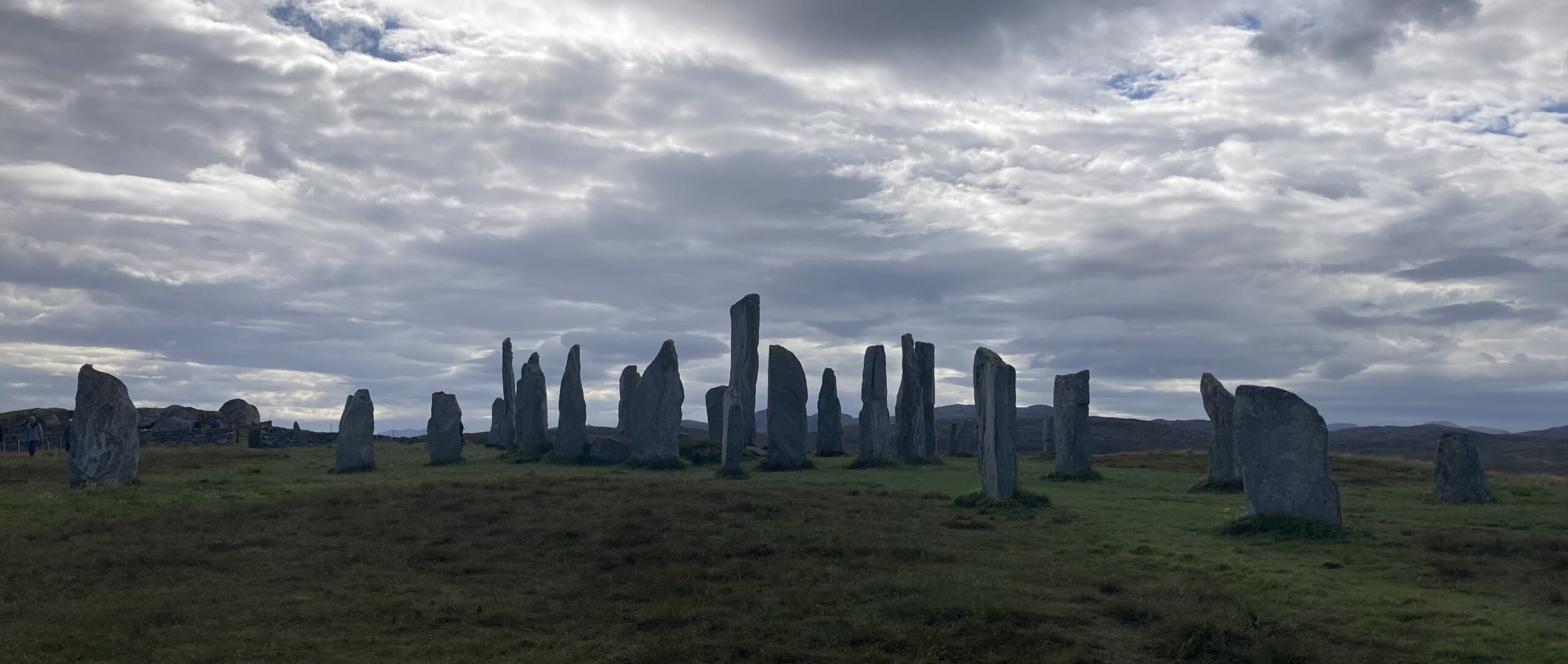
We grabbed a quick lunch with the hard working ladies at Breaclete’s Community Centre before heading off to another must see highlight, the world renowned Callanish standing stones, probably erected around 5000 years ago.
We had twenty minutes here, regarding with awe the massive stones that, like icebergs, hide more than they show. We really didn’t have time now to go to the furthest point North at Ness but I really wanted to show Andy the site of possibly the last major tragedy of World War One before meeting our friends at Hebrides MRT.
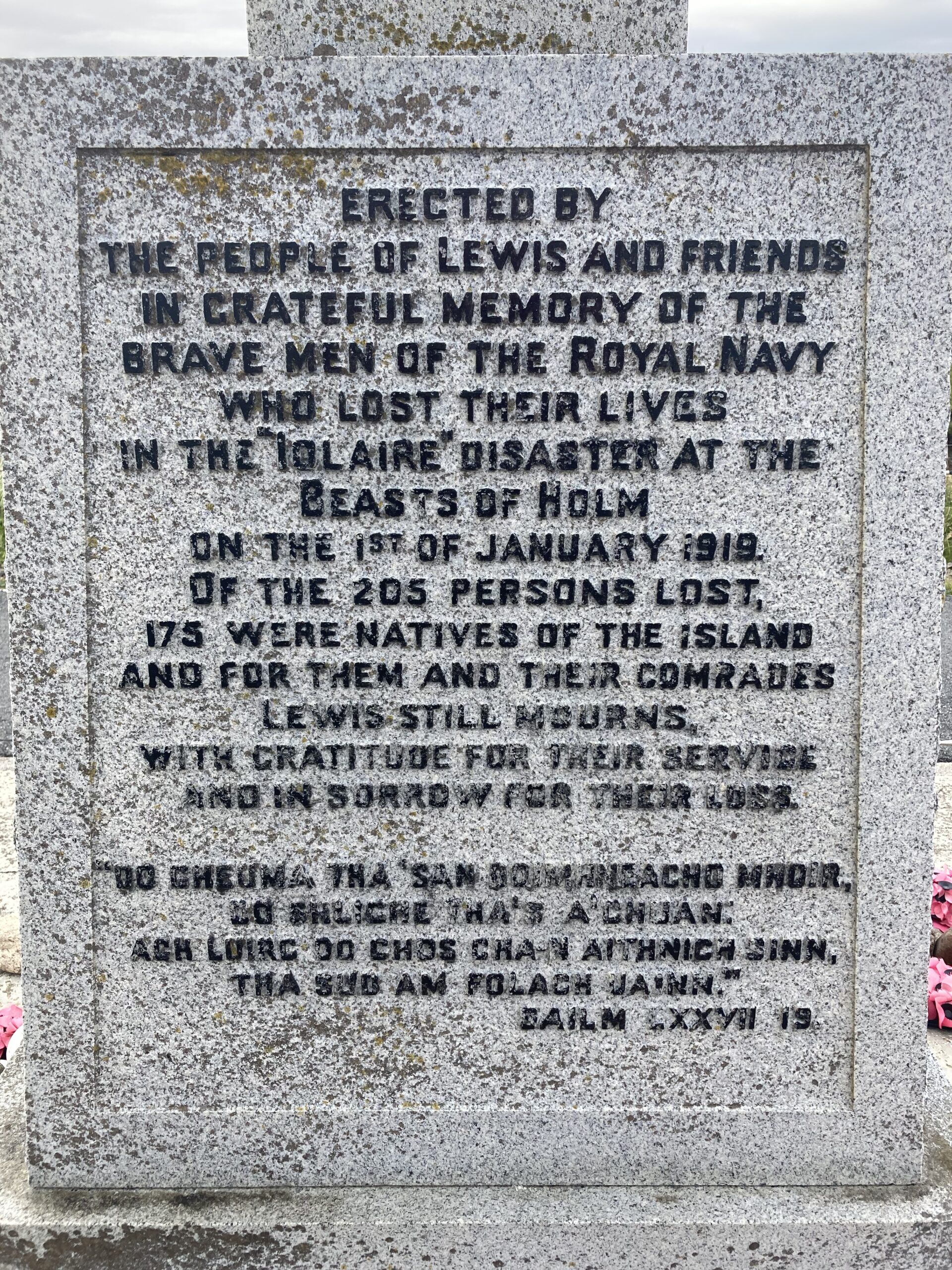
Returning home after the 1914-18 conflict on New Years Day 1919, two hundred and one men were drowned when the naval yacht Iolaire struck rocks at Holm, a mere 20 yards from the shoreline. Thrown into the angry foam of a dark, gale blown sea, just 79 of the ships occupants miraculously survived. This was a monumental tragedy for the island and Stornaway in particular where virtually every family experienced a bereavement.
After the sobering visit to Iolaire’s memorial, we now headed back through Stornoway and the happy prospect of meeting some of the Hebrides MRT at their fine and recently built base. On arrival, Rosemary greeted us like old friends and we soon had a brew in our hands and were talking shop. Soon afterwards, Michael rocked up on a vintage Honda VT500 which Andy and I were all over like a rash! A few minutes later we were joined by Fraser, the team’s equipment officer and his delightful, one eyed spaniel.
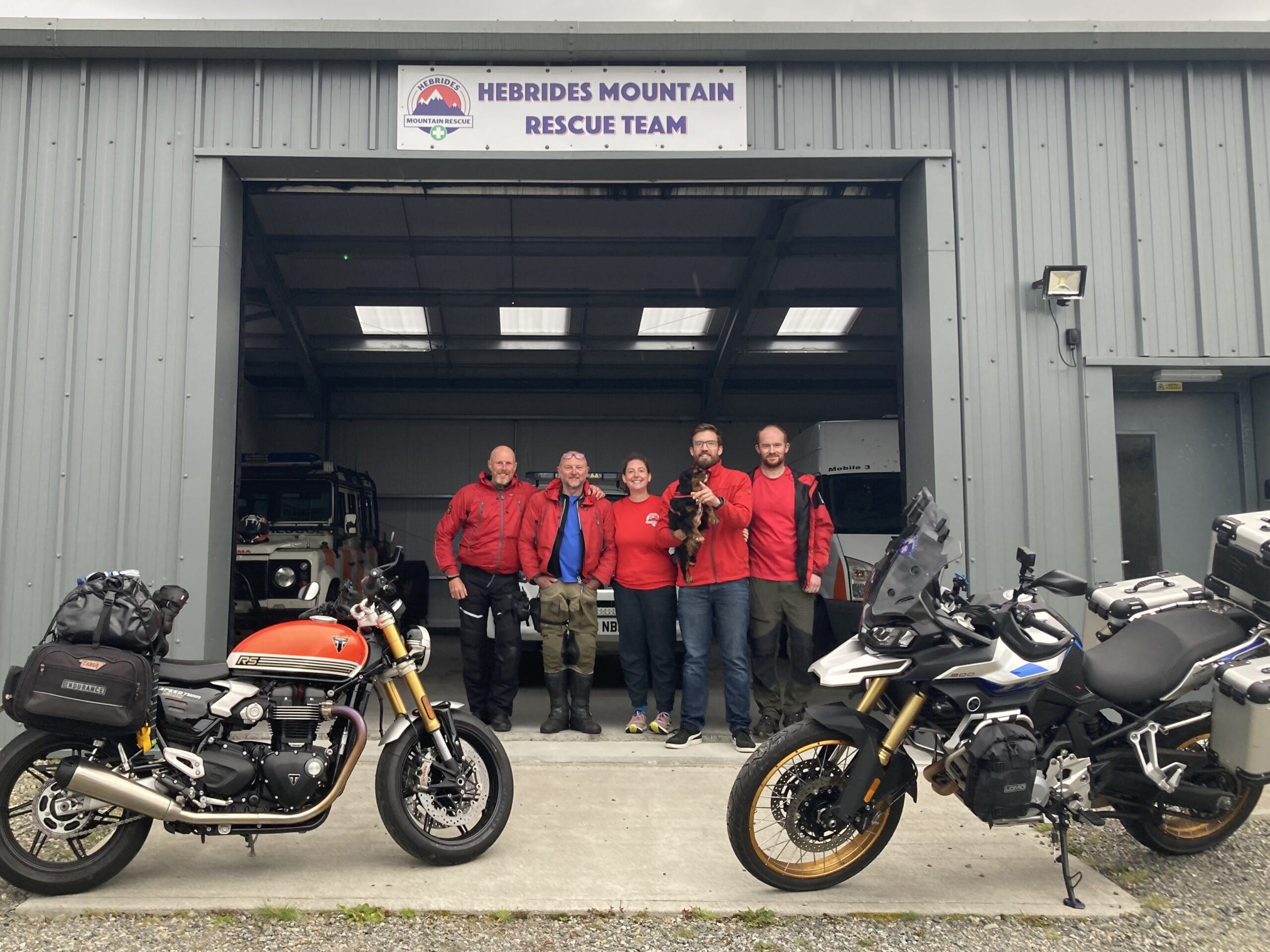
The hospitality we received from this tight knit and isolated team was of epic proportions! We were invited to stay the night at the comfortable base which we gratefully accepted. We talked about all things MRT and Hebrides related for an hour and then the fantastic folk left us to dry kit, relax, eat and rest up for the huge and daunting day five ahead.
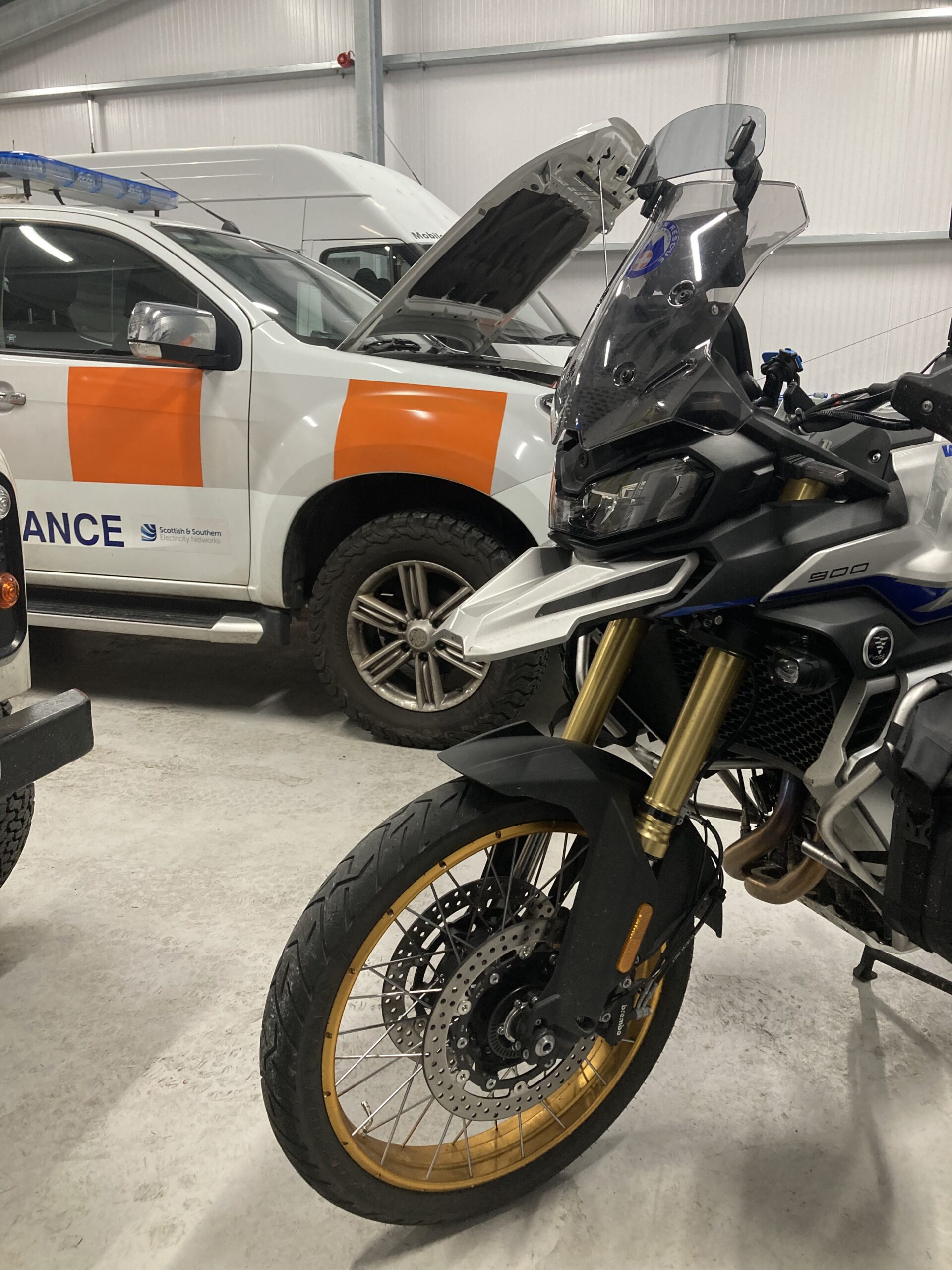
Rosemary had left bread and other goodies so we made toast for tea and enjoyed the first of several brews. She’d told us to take more food with us but regretfully we had no space in our panniers so left it to feed the team!
We can’t thank Hebrides MRT enough and look forward to future meet ups.
Hebrides MRT operates throughout the whole of the remote Outer Hebrides, ranging from Barra in the south to Lewis in the north. The team is based in the town of Stornoway on Lewis, providing immediate access to the hills of Harris and Lewis.
The team is made up of 25 volunteers, who give up their time to train and help those in need in urban, hill and moorland environments. Team members are trained in mountain skills with the addition of search management techniques, communications, advanced first aid, advanced rigging and off-road and ATV driving.
The team responds to a diverse range of incidents ranging from overdue walkers and crag fast climbers to missing persons and animal rescues.