Category: Long Way Round

  • LWR day seven

    Still aching from the previous long day in the saddle, we set off from Aviemore Youth Hostel aware that both bikes and ourselves needed fuelling up for the challenging miles ahead.

    With that in mind, we parked up in the town centre for breakfast at the excellent Coffee Pot cafe and to make a quick video report of how things were going. The cafe is directly opposite the famous Winking Owl pub where many climbers and skiers have repaired to after a big day on the hill.

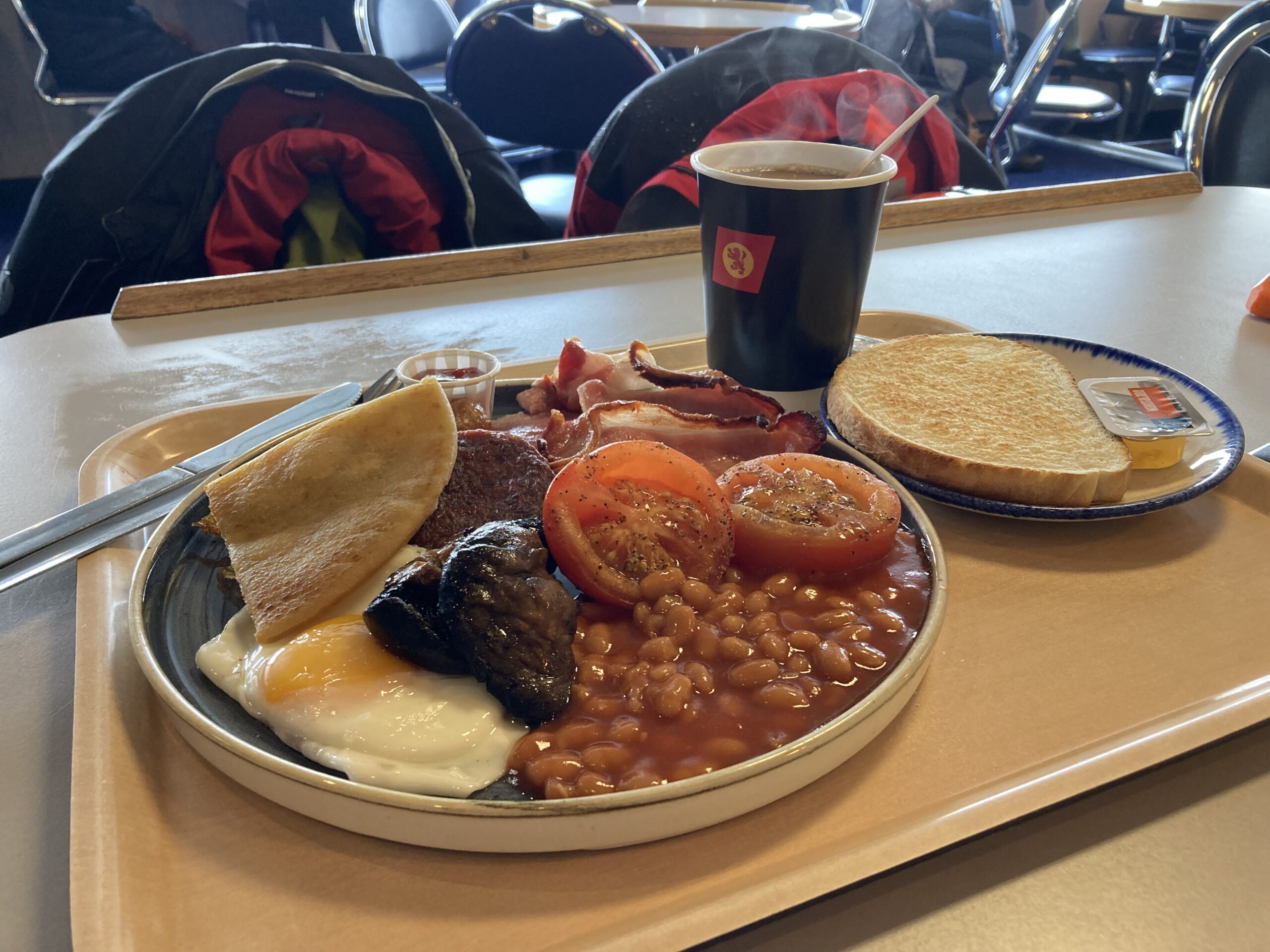
    Replete after a full English (or Scottish in this case!) breakfast, we felt physically and mentally prepared for concentrating on the three hundred miles of road between us and our final base of the day at Drymen, near Loch Lomond.

    The route Eastwards to visit Aberdeen MRT took us into stunning landscapes with distant views of the Cairngorms and along winding roads through patch work purple and green moorland.
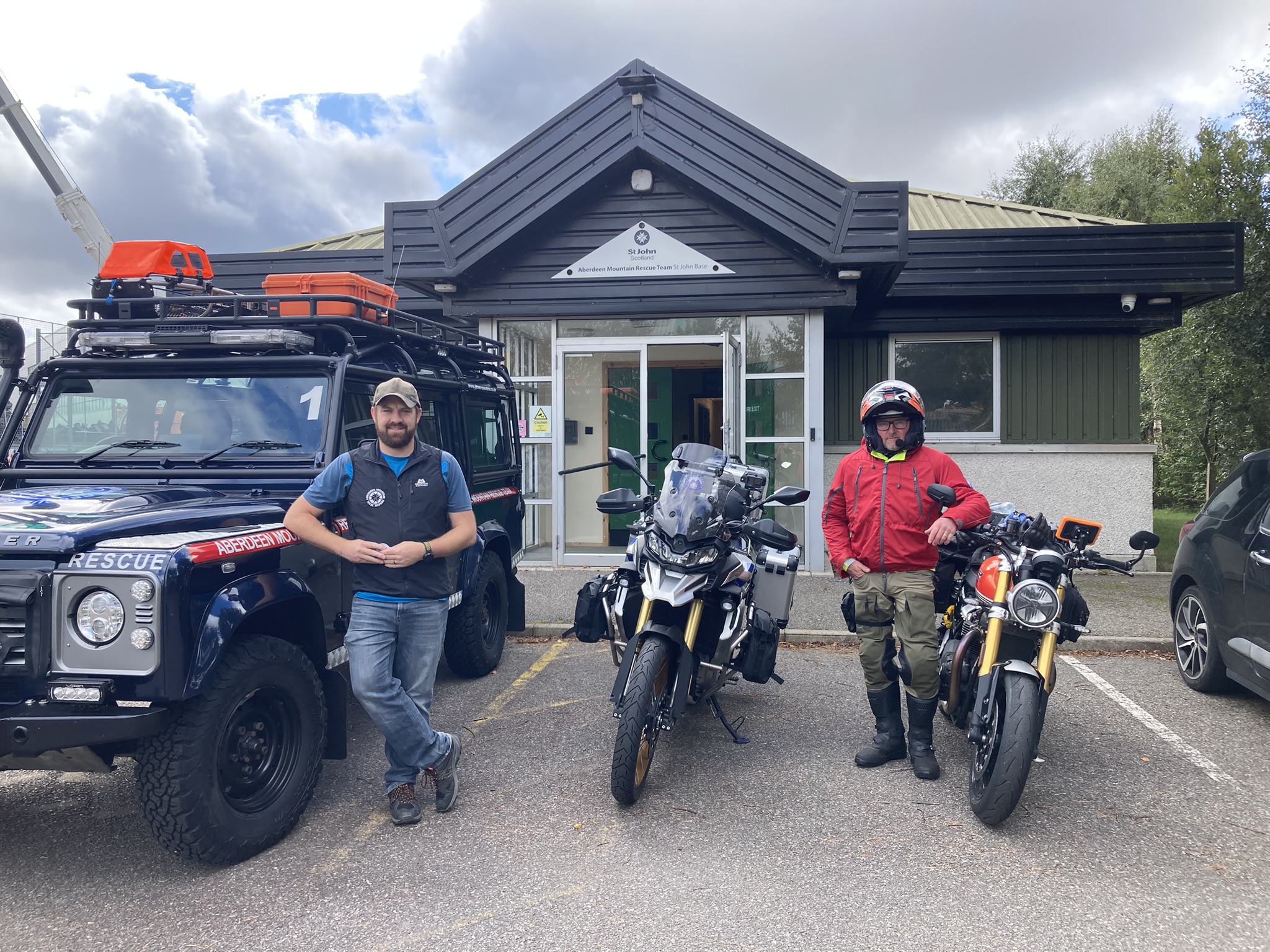
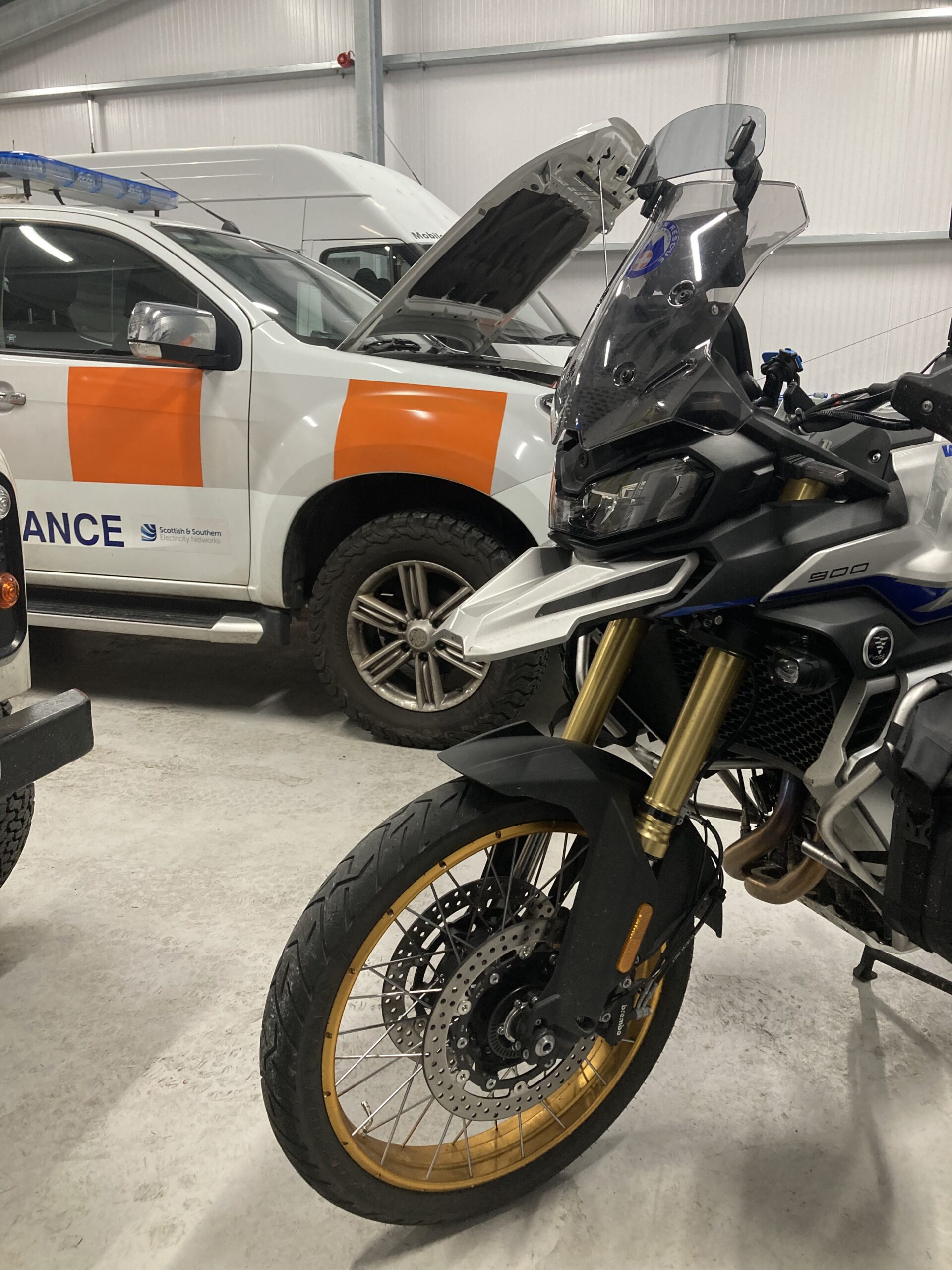
    Stuart, the Team Leader of Aberdeen MRT, generously gave us a full tour of their purpose built and up to the minute base at Westhill. Of great interest to us were their fleet of Landrover Defender 110’s which are currently undergoing a rolling project of full refurbishment. This gave us much food for thought and information to take back to our team management. Andy had to be dragged away from the vehicles – I think he’d transfer to their team in a heartbeat if they’d have him!
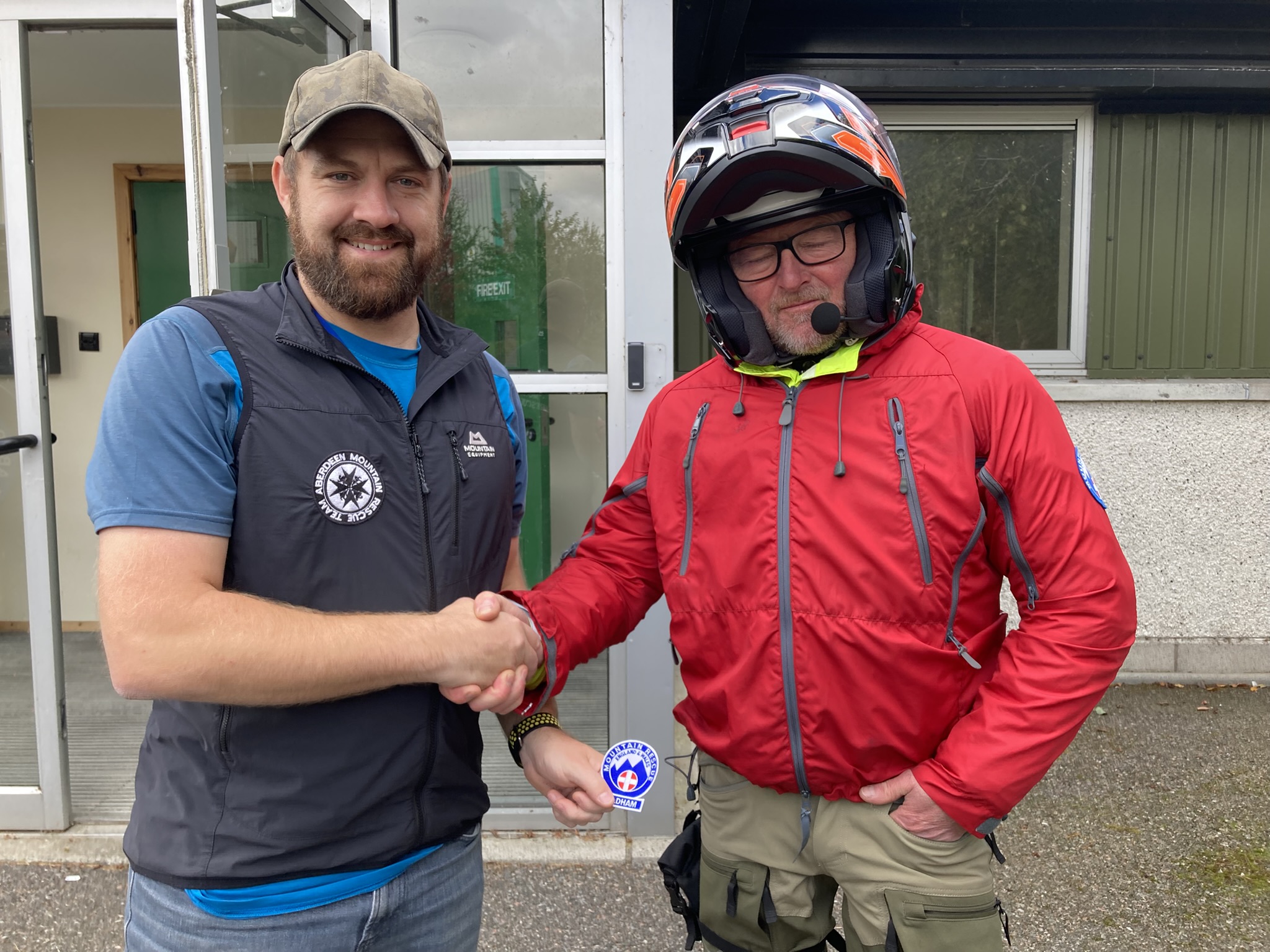
    The team provide search and rescue services in the mountains of the Cairngorms, and the hills of lower Donside and Deeside.
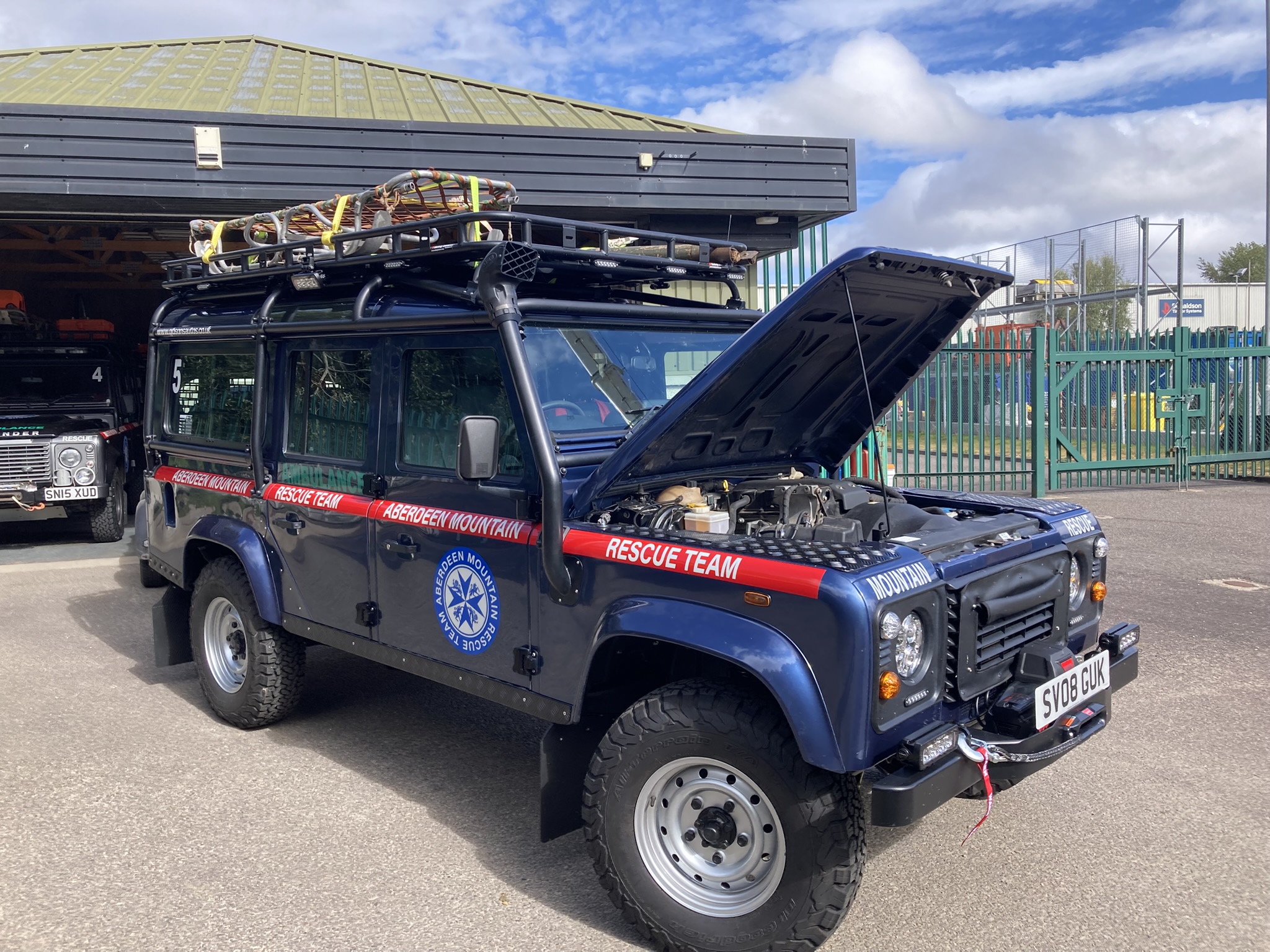
    We could happily have spent all day with Stuart but time was marching on and we needed to concentrate on riding the back roads towards Braemar and the comprehensively equipped MRT base there.

    Braemar MRT cover an extensive area which includes the Southern part of the Cairngorms and Lochnagar. Notably, they have the Royal estate of Balmoral on their watch which is located between Braemar and Ballater.
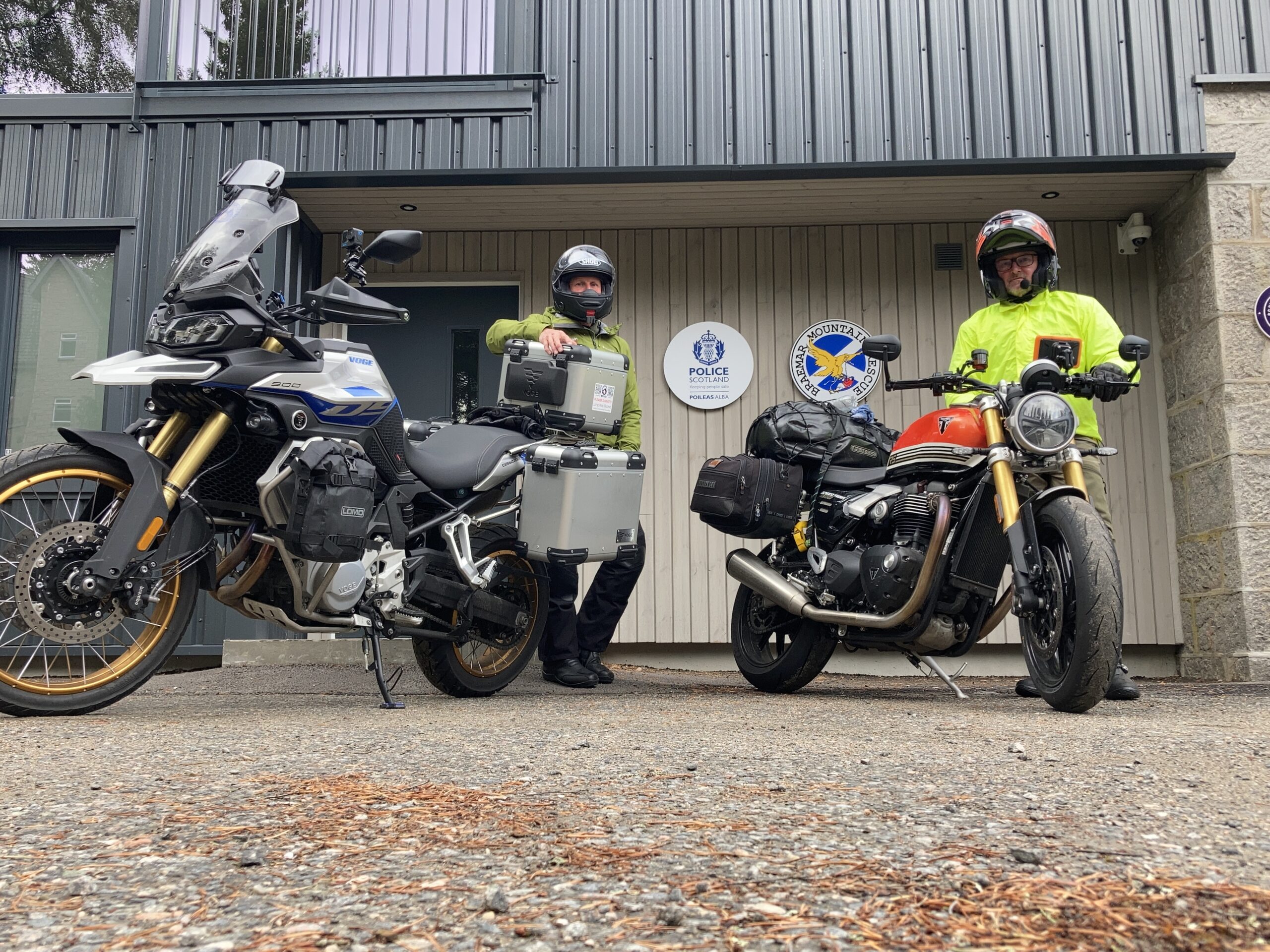
    We also nipped in to see Mike and Pete who run the Braemar campsite where I frequently stay. They were highly interested in our trip and happily posed for photos.
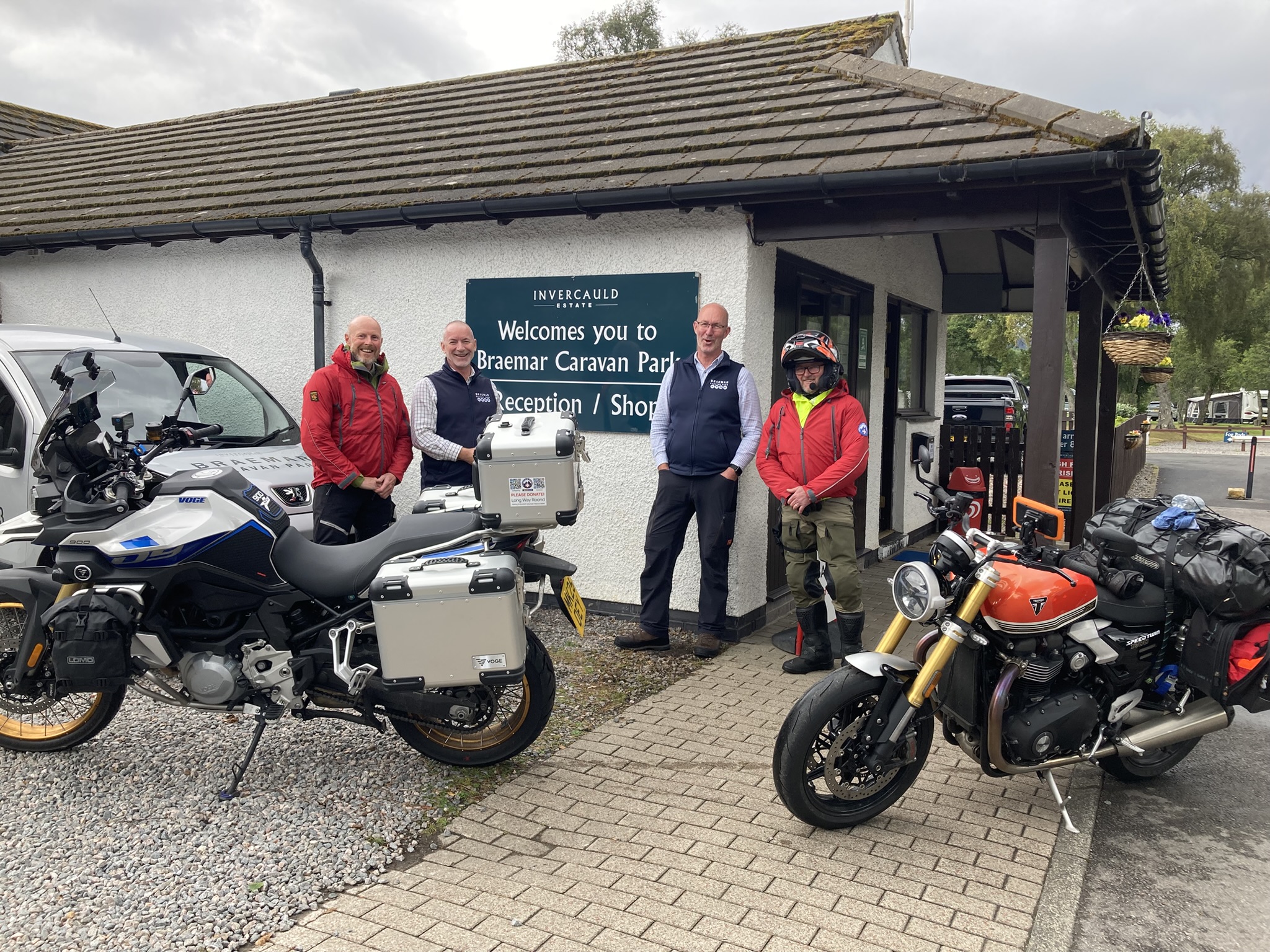
    We blasted over the famous Glenshee road to the next base visit at Blairgowrie where Tayside MRT are located. The team operate throughout Angus, Dundee, Perth & Kinross and parts of Fife.
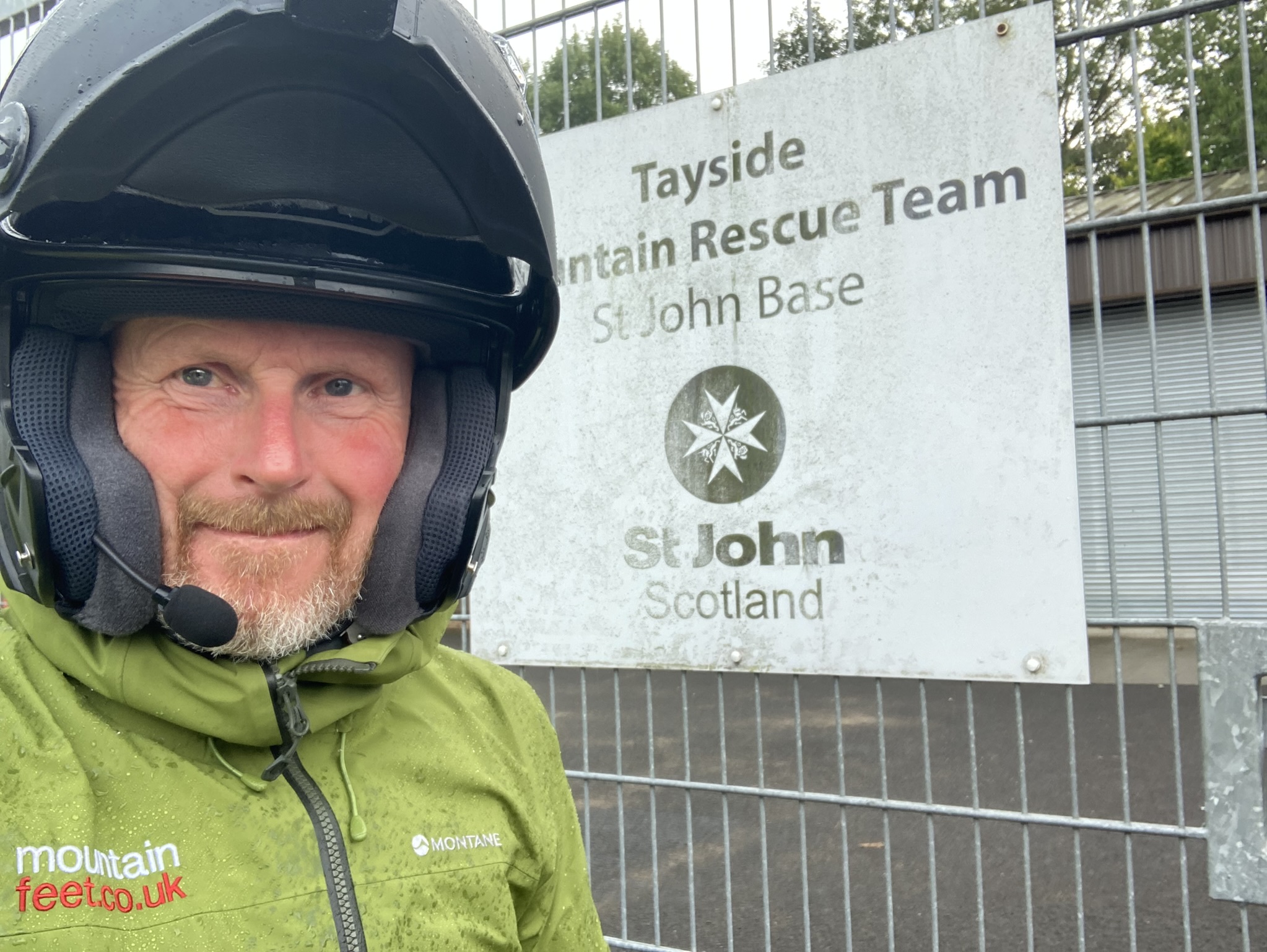
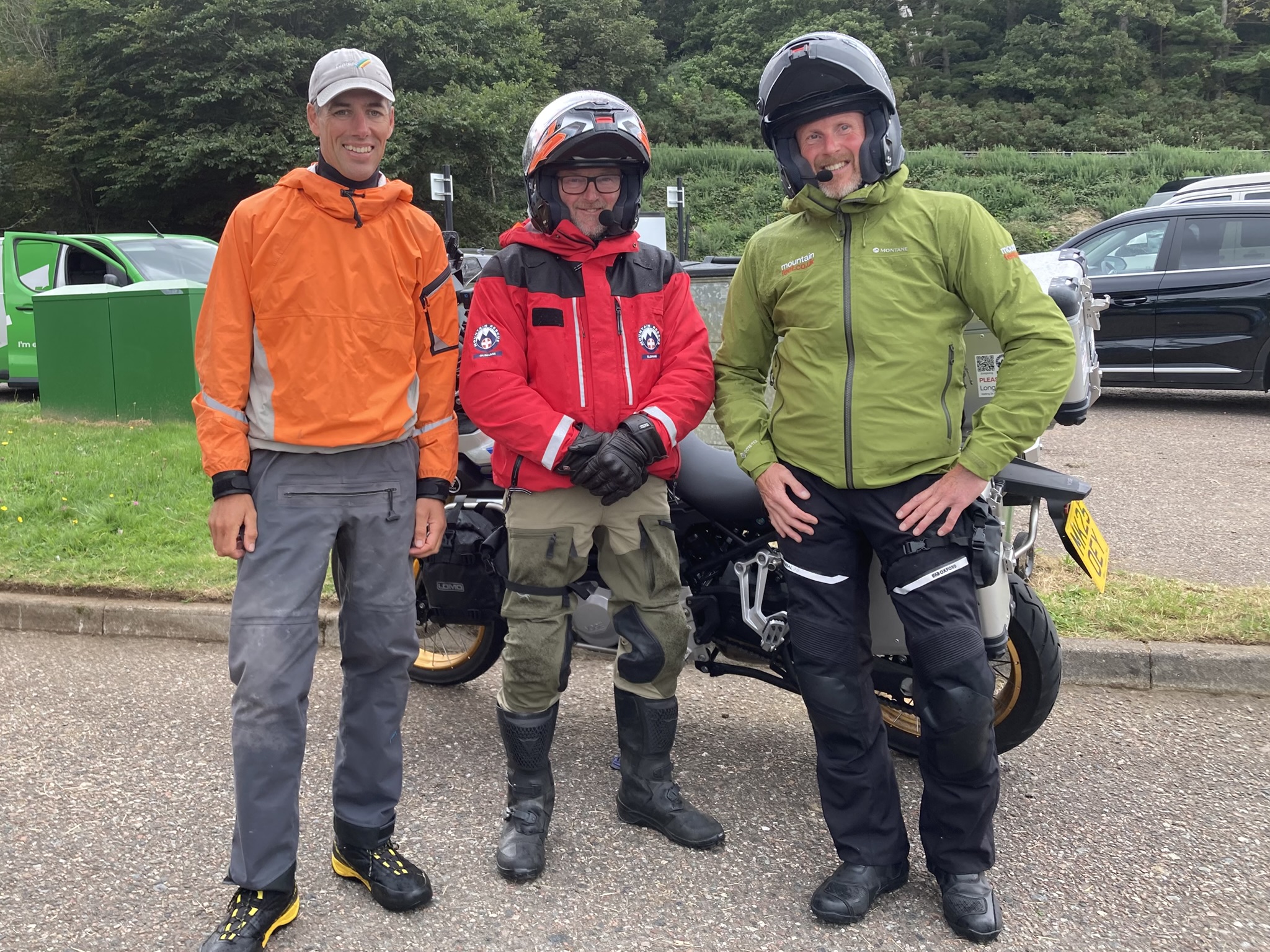
    After some photos in the pouring rain, we rode the long length of Loch Tay to Killin – famed amongst white water kayakers for the Falls of Dochart, and hillwalkers for nearby Ben Lawers.
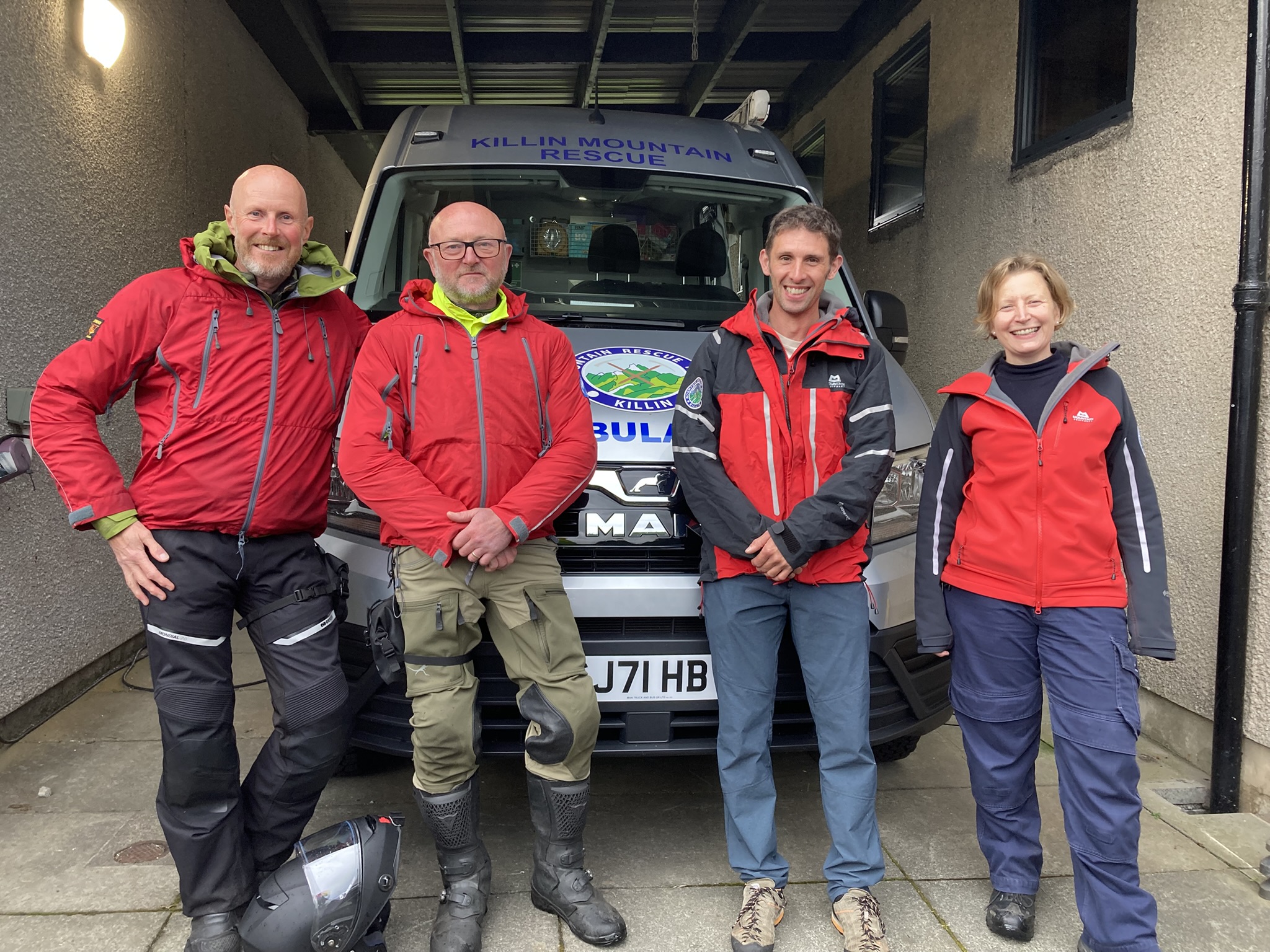
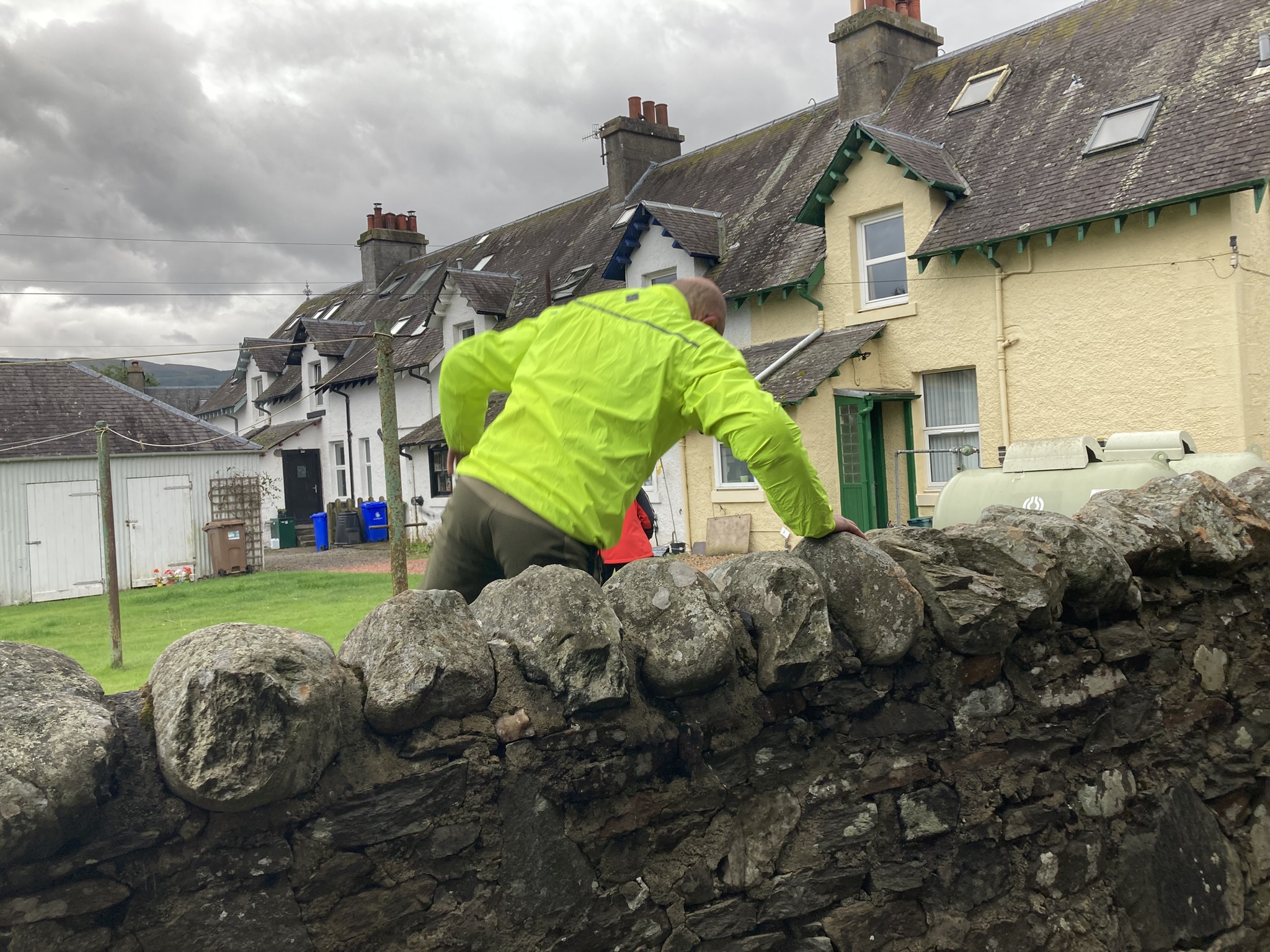
    At Killin MRT‘s base next to the police station, we were met by Stephen, Kirstine and Teddy who were happy to answer our questions about operational matters. Andy then had to call on his fitness to answer a call of nature by vaulting over a high wall to use facilities at Kirstine’s house just a few metres from the base!
    It was hard to leave these excellent folks and their kind hospitality but we still had two bases to go and time was getting tight.

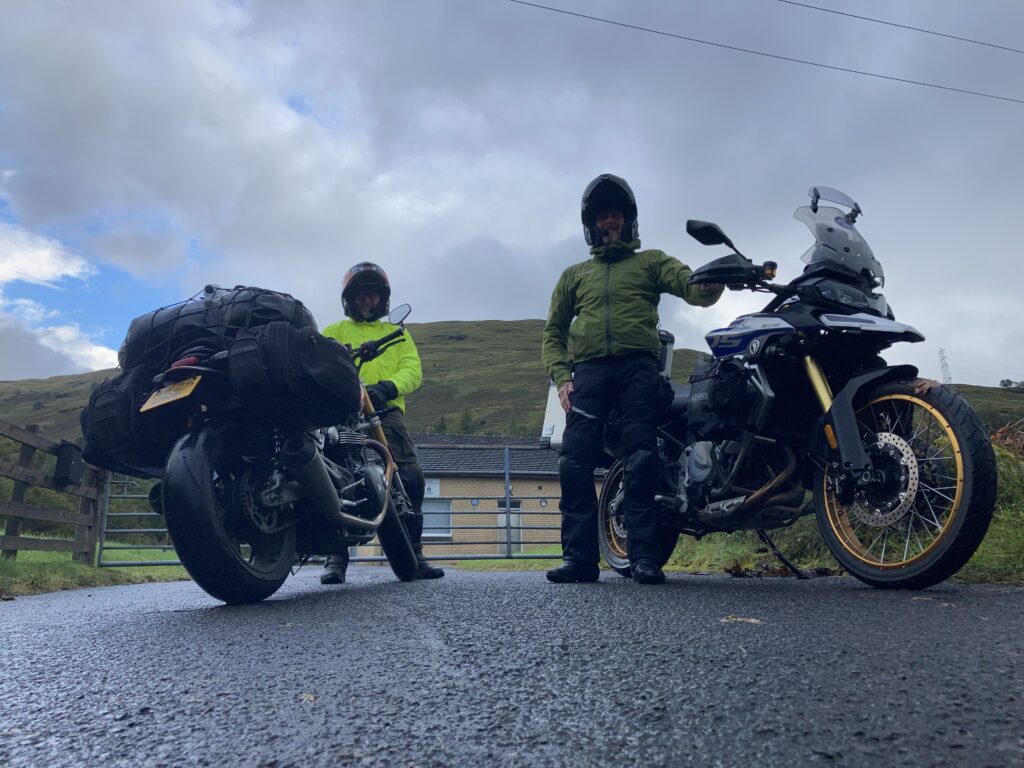
    Arrochar MRT base on the shores of Loch Long was visited fairly quickly as the weather was getting grim now. They provide an important service to the myriad of walkers and climbers who come to visit the mountainous area around Ben Arthur, more commonly known as The Cobbler.
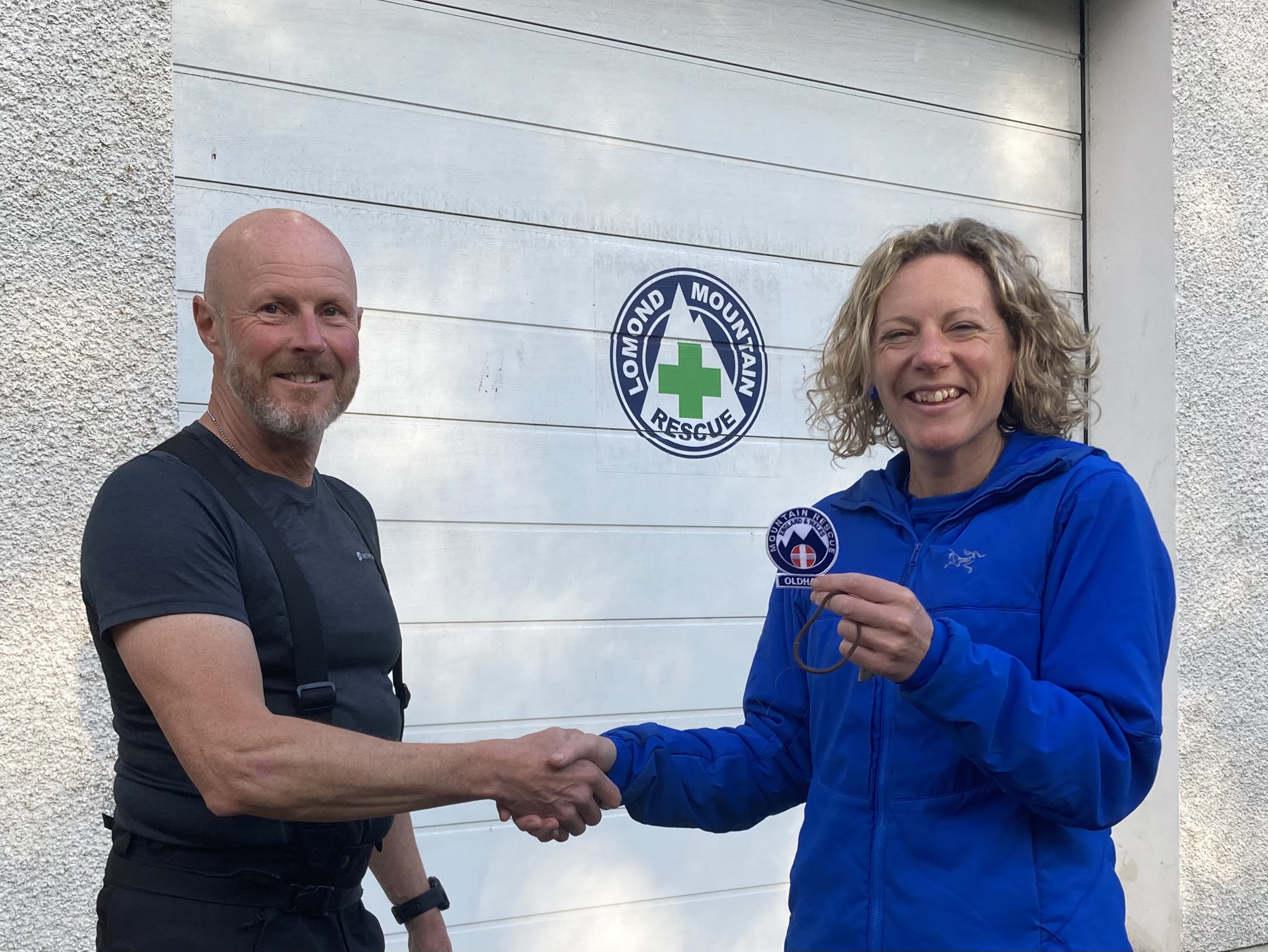
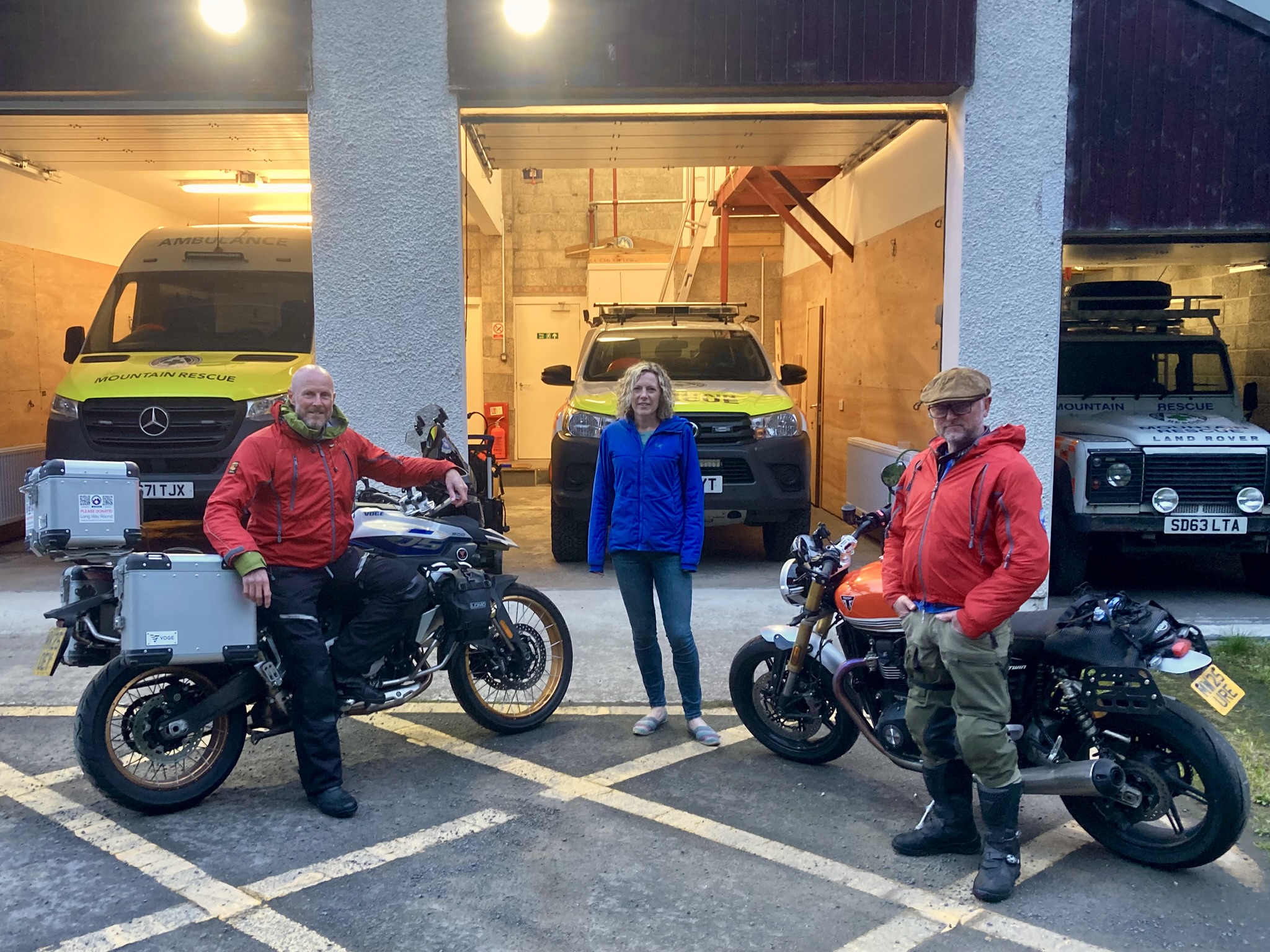
    We now had a meeting to make with the kind folk of Lomond MRT who were letting us stay at their purpose built base in the lovely village of Drymen.

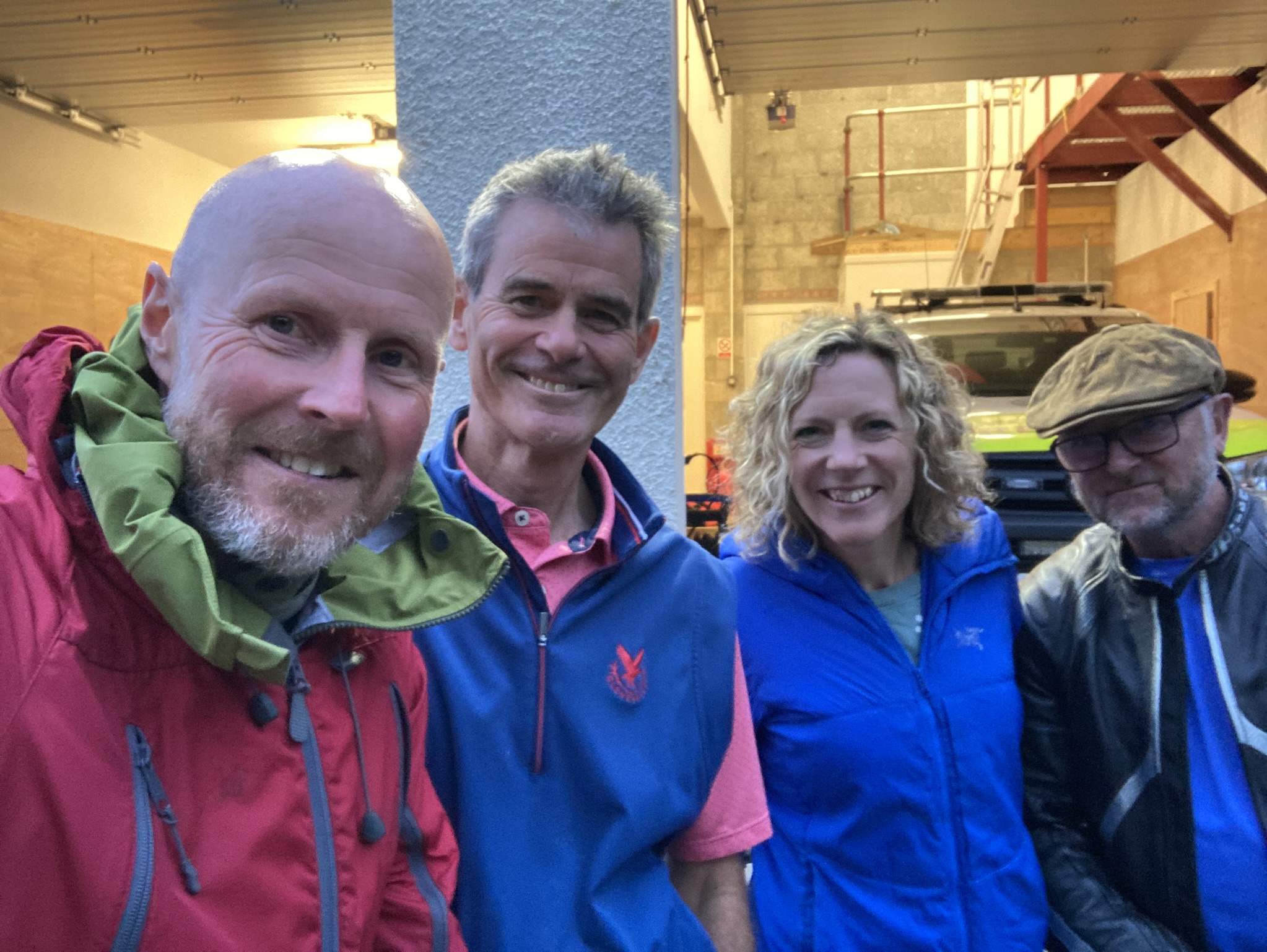
    We arrived wet and cold to be royally greeted by team members Paul and Elspeth and were soon ensconced in the warm kitchen. We quickly recovered enough to enjoy a visit to a local pub with Elspeth, before heading back to the base to charge ourselves up for what we knew would be another tough day…

    Aberdeen MRT

    Aberdeen Mountain Rescue Team was formed in 1964, and the current base in Westhill was purpose built by the Order of St John for the Team and to provice both garaging for team vehicles and training facilities for members.

    The team’s main operational area covers the Cairngorms and Lochnagar. This is an exceptionally large area with a wide variety of mountain environments and potential hazards, and contains several of the highest mountains in the United Kingdom. The team has two forward bases located at Derry Lodge and the Spittal of Muick which provide accommodation for members during callouts and training.

    amrt.org.uk


    Braemar MRT

    The team cover a vast and popular area in the Cairngorm National Park. Their headquarters are in Braemar, with a subsidiary base in Ballater.

    Braemar Mountain Rescue Association was formed in 1965 to work hand in glove with the local Police Mountain Rescue Team formed some years earlier. This tradition is maintained today, the two teams operating as one integrated unit with a joint management.

    As well as their direct involvement in rescue work which involves almost forty well trained volunteers, the Association is involved in a number of related ventures. Among these are the provision of an emergency telephone at The Spittal of Glen Muick and a yearly programme of lectures, visits and static displays to further the cause of mountain safety. The team also provides assistance to Police Scotland in the search for missing persons wherever their expertise might prove useful.

    braemarmountainrescue.org.uk


    Tayside MRT

    The team was formed in 1976 and responds to between forty and fifty callouts per year.

    The team operate throughout Angus, Dundee, Perth & Kinross and parts of Fife. They have a very close working relationship with their Police colleagues in Tayside and attend the majority of callouts as a joint team.

    There are currently nearly forty volunteers in the team, with a variety of occupations, from all over their operational area of some 3,000 square miles.

    As well as their main training base in Blairgowrie, they have a supplementary base in Aberfeldy (West), and also have access to both Forfar (East) and Perth (Central) Police Stations.

    The team are highly proficient in many disciplines including advanced medical care, rope rescue, drone SAR, swift-water rescue and searching with dogs.

    taysidemrt.org


    Killin MRT

    Killin, Callander & District Search and Rescue Group is an incorporated Scottish Charity and operates as Killin Mountain Rescue Team. 

    Established in 1968, the team provides a volunteer rescue service from bases at Killin and Callander.

    Their membership of approximately forty, cover the mountains and remote areas in the northern part of Loch Lomond and the Trossachs National Park. Mountains such as Ben Lui, Ben More, Stob Binnien, Stuc a Chroin and Ben Ledi make the area highly popular with hillwalkers in both summer and winter. The West Highland Way also passes through the team’s area, placing additional demands for assistance.

    Many of their team members work in the hills and have expert local knowledge and hill craft skills. They are able to quickly respond to walkers and climbers in distress, often during challenging night and winter conditions. They may also rely on support provided by the Coastguard SAR helicopter service who can, weather permitting, assist when operating in high and isolated locations.

    killinmountainrescue.scot


    Arrochar MRT

    The team have around thirty volunteer members to provide a mountain rescue service when requested by Police Scotland within the region formerly known as Strathclyde.

    The team are most frequently deployed around the mountains of the ‘Arrochar Alps’ but cover a wide geographical area as diverse as Bridge of Orchy, Dunoon, Isle of Bute, Loch Fyne, Glen Fruin, Lochgoilhead and around Loch Lomond. They can also provide support to neighbouring teams in Oban, Glencoe, Killin and Lomond.

    The team was formed in the mid nineteen fifties, but it wasn’t until 2002 that they moved into a purpose built base funded by the Order of St John with a fine view overlooking the Cobbler.

    The team possess an expert and diverse set of skills relating to all areas of search and rescue including drone and dog search capabilities.

    arrocharmrt.org.uk


    Lomond MRT

    Lomond is one of the busiest mountain rescue teams in Scotland. Founded in 1967, the team covers an area of over 1000 square miles in one of the most popular mountain areas in the country. The Loch Lomond and Trossachs National Park sees two million visitors a year and 60,000 walkers annually attempt the West Highland Way.

    Around thirty five voluntary full team members are available to assist walkers, runners, cyclists, climbers and holiday makers within the region. Centrally located in a purpose built base in the village of Drymen, the team can quickly respond to any emergency in its off road vehicles.

    Team members are trained in a broad spectrum of skills such as advanced first aid, search management, casualty care, navigation, off road driving, radio communications and technical ropework.

    As with other teams, Lomond MRT work closely with a variety of external agencies. Their search dog handlers are affiliated to the Search and Rescue Dog Association, Police Scotland initiate their callouts and the Loch Lomond Rescue Boat assists the team in shoreline searches and transportation to the islands on Loch Lomond. They also work closely with the Coastguard Service’s S92 helicopters from Prestwick.
    lomondmrt.org.uk

  • LWR day six

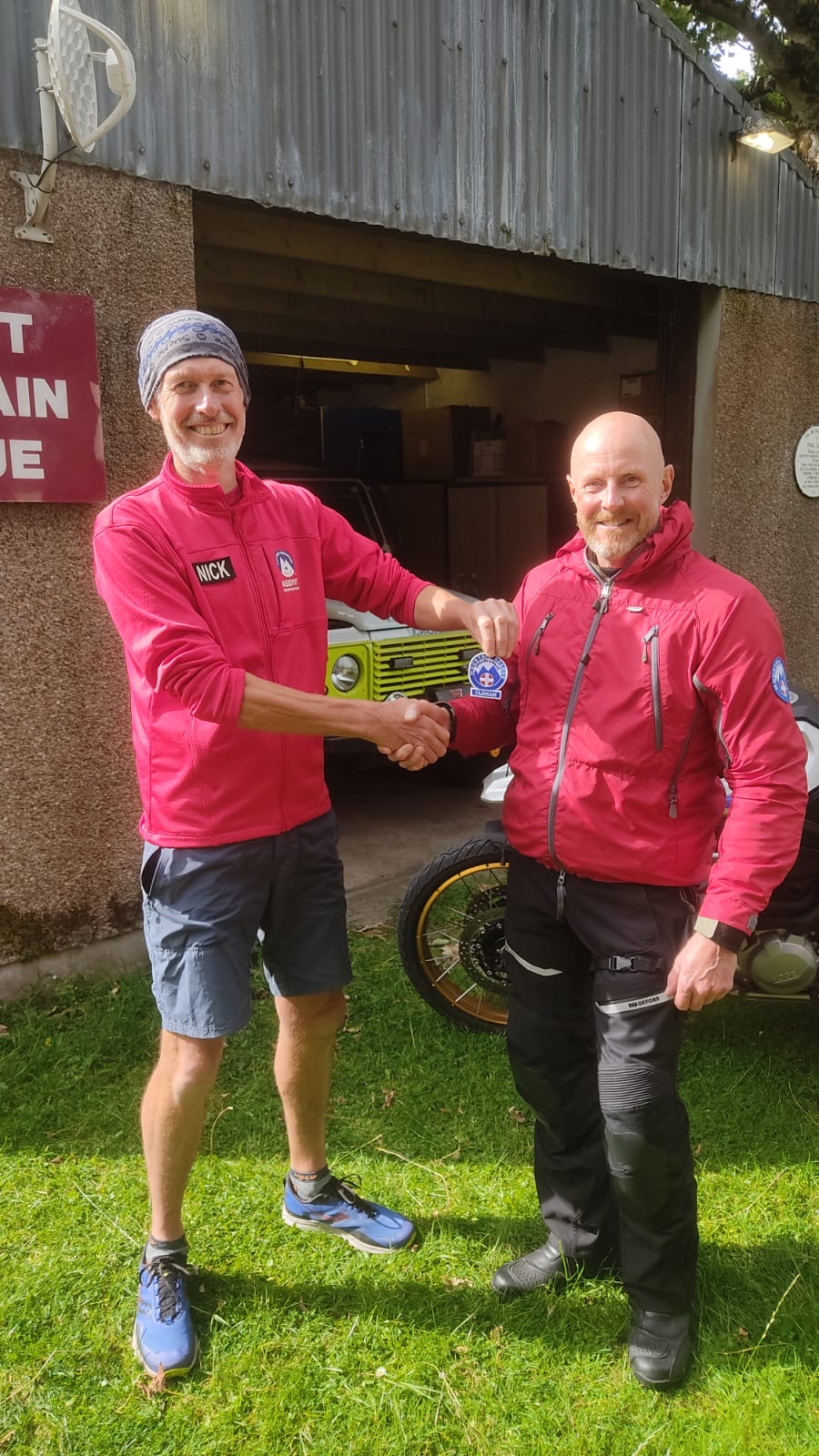
    Very early in the morning, we crossed back to the mainland at Ullapool from the Outer Hebrides. We immediately turned North to visit Assynt MRT where old friend Nick Ogden greeted us with tea and biscuits. Now it felt like we were on the home run as we headed South – how wrong we were! Actually, the hardest part of the whole trip was just starting…

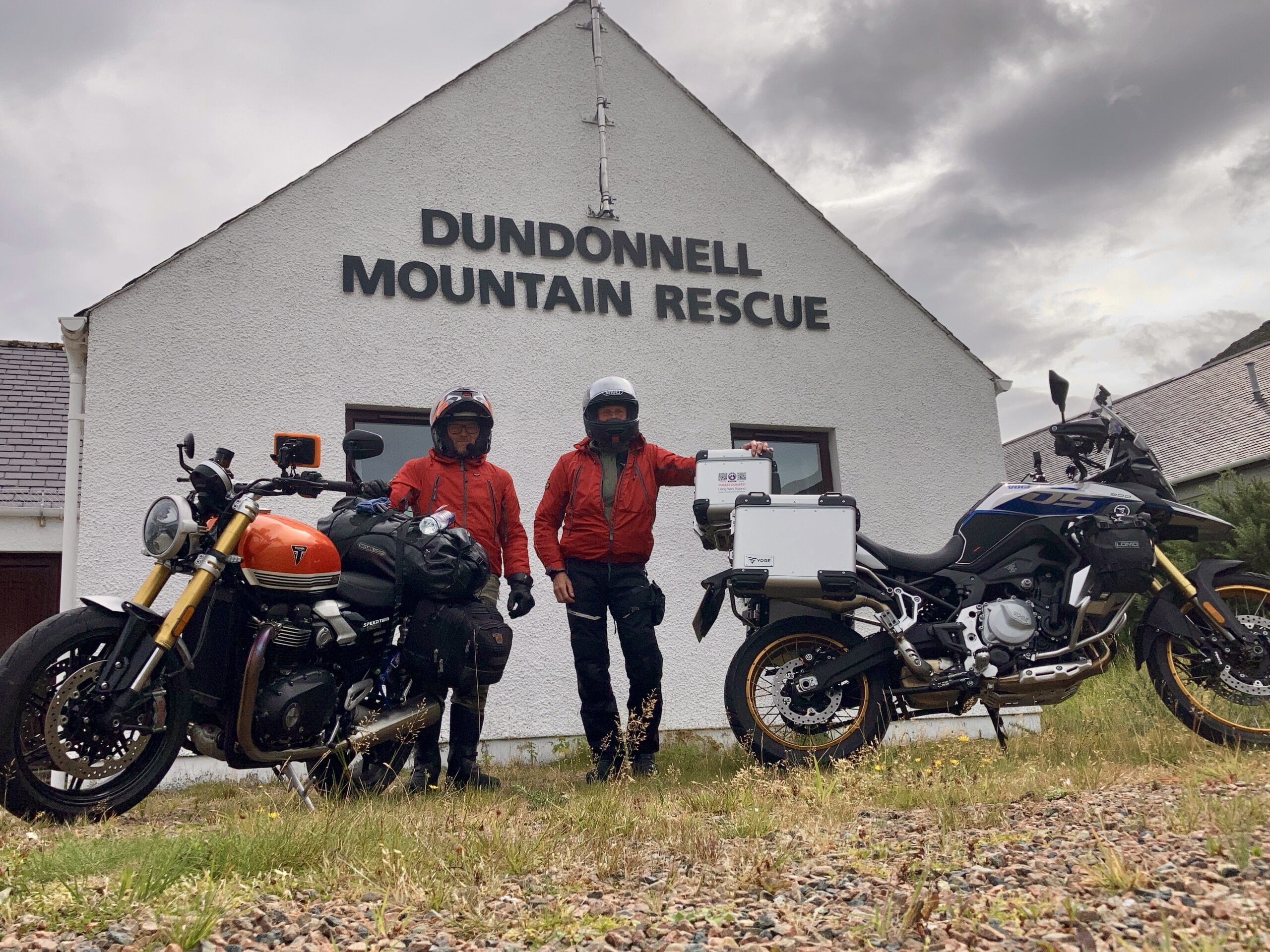
    We left the main Ullapool to Inverness road and wound our way to Dundonnell at the foot of An Teallach. Dundonnell MRT were represented by Conor Brown who also runs a kayaking guiding business called Ewe Canoe.

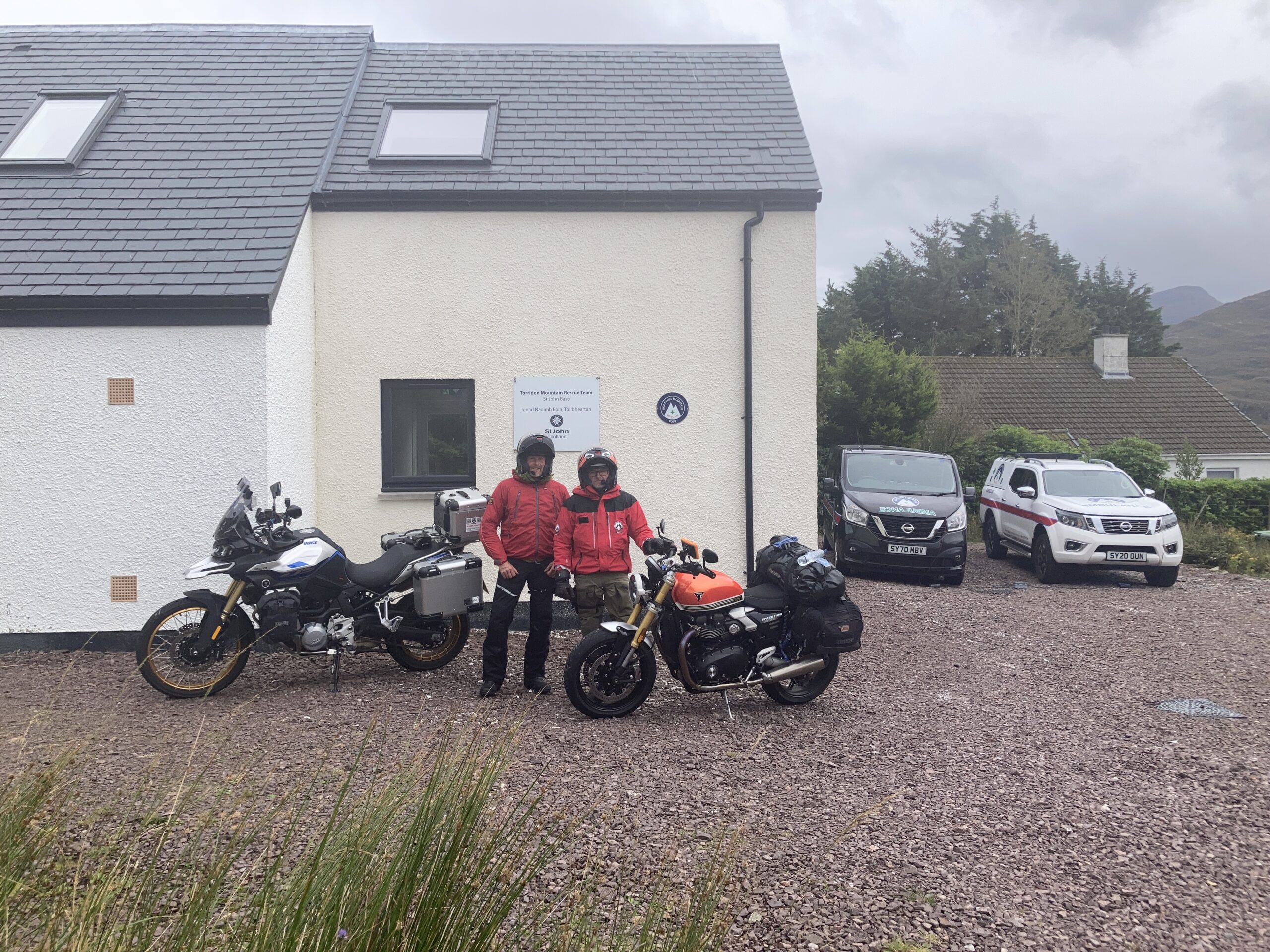
    We rode the impressive coast road past Aultbea and Gairloch before heading to through remote and mountainous terrain to the Torridon MRT base in ever worsening weather. We couldn’t pass through the attractive village of Shieldaig without a quick pit stop to see friend Ruairidh at his stunning camp site.

    We then took the long single track road to Lochcarron and afterwards rode what felt like endless soggy miles to Aviemore in squally and cold conditions.

    There was a comedy moment along the way – well, Andy found it funny! Believe it or not, my bike has heated grips and a heated seat, but while trying to switch on the former I inadvertently activated the latter. By trying to switch it off again, I managed to toggle it to its hottest setting – designed to penetrate thick layers of winter clothing. Because I had thin, Summer trousers on, my backside rapidly went from being comfortably warm to almost blisteringly hot and I was in real pain till eventually managing to toggle the well hidden switch off…

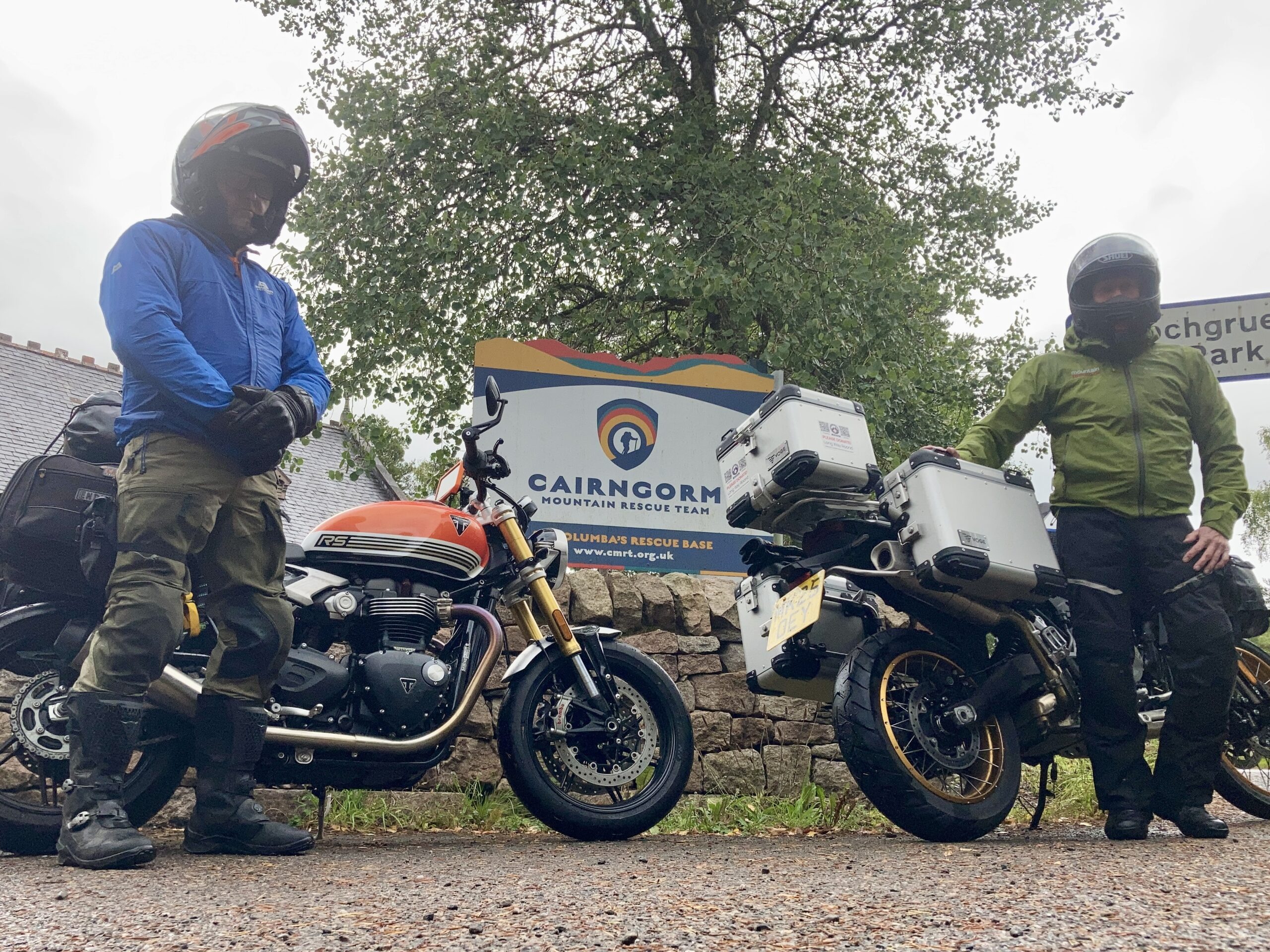
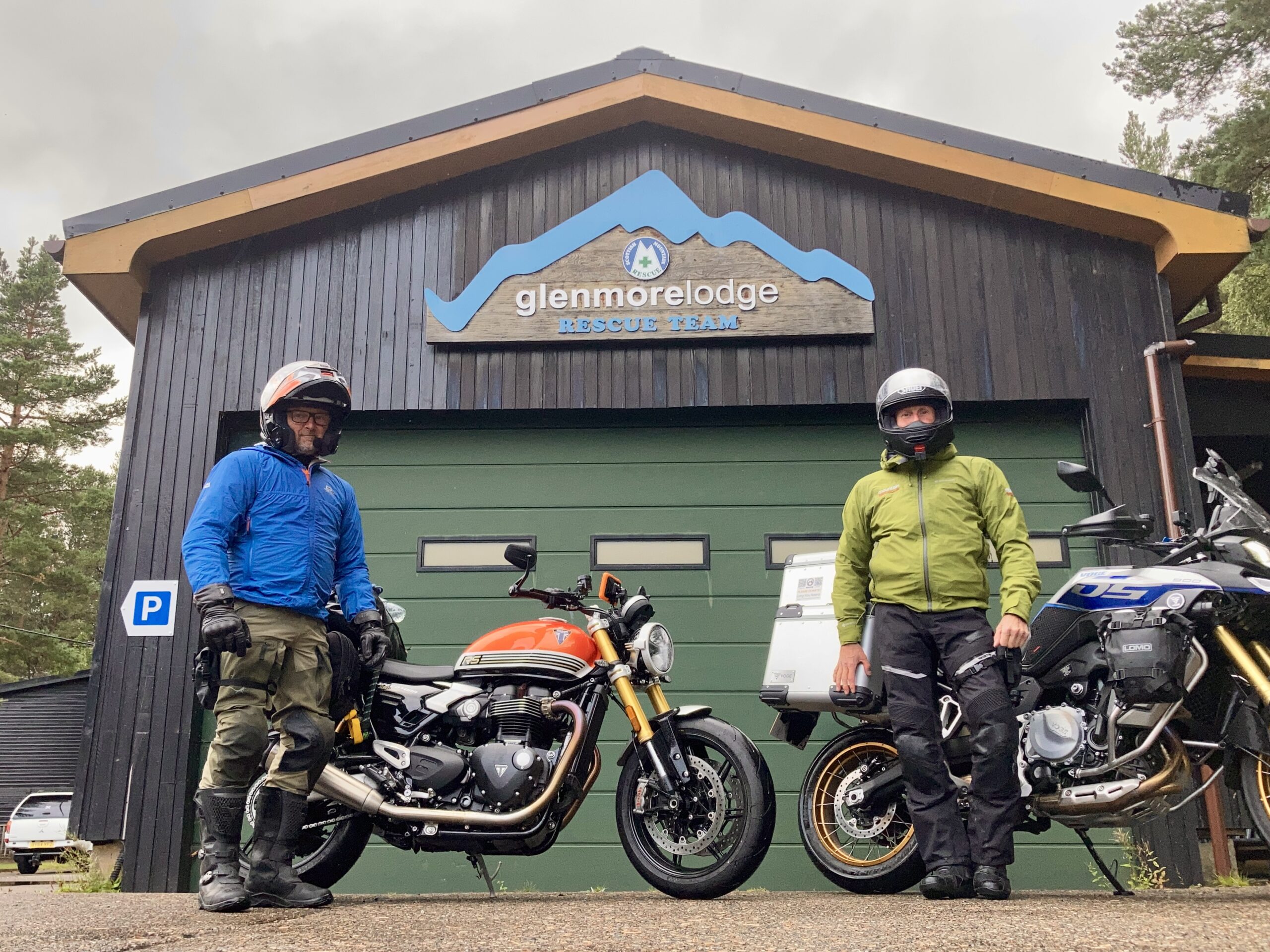
    Despite being wet, cold (apart from my backside!), midge bitten and road weary, we managed to visit both Cairngorm and Glenmore MRT’s before retreating down to the youth hostel at Aviemore and a much needed shower and some rest.

    Mileage ridden was 301 – each day gets harder as we recover less at night. Guess we’re just feeling our age these days…


    Assynt MRT

    The team cover a truly colossal area – the Northern region of Scotland of Caithness & Sutherland which is bounded by the Western, Northern and Eastern coastline of the country.

    The team is comprised of approximately 35 active and skilled members, many of whom are professional mountaineers and Remote Rescue Medical Technicians. Amongst the team’s membership there are search dogs and their handlers, part of the Search and Rescue Dog Association (SARDA).

    Assynt MRT covers fabled mountains such as Suilven, Cul Mor, Ben Mor Assynt, Ben Hope and Ben Loyal in the far North. Because of the remoteness of the area and the wide distribution of members, helicopters play a vital role in the team’s work and a single fixed base is impractical.

    assyntmountainrescue.co.uk


    Dundonnell MRT

    The team are based in the village of the same name at the foot of the rugged and spectacular An Tealach mountain range. Thirty highly trained members cover a staggering 41 Munros including many other hills of note and remote areas such as Fisherfield and Glen Affric.

    Because of the unique terrain in their area, the team are also skilled at extractions from river gorges. Like all other Scottish teams, Dundonnell MRT’s personnel work closely with HM Coastguard who provide search and rescue services from both Stornoway and Inverness.

    Because of the extensive size of their area, the team mains three bases at Dundonnell, Ullapool and Dingwall.

    dmrt.org.uk


    Torridon MRT

    The team came into being in 1972 and covers a large area extending from Achnasheen, in the east, to Applecross, in the west, and from Kinlochewe, in the north, to Lochcarron, in the south. The area includes 17 Munros, including the iconic ‘Torridon triptych’ of Beinn Alligin, Liathach and Beinn Eighe.

    The team have around 30 personnel on their our callout list, drawn from all walks of life – all of whom have expert mountaineering skills.

    torridonmrt.org.uk


    Cairngorm MRT

    The team are based at St Columba’s Rescue Base, Inverdurie, Aviemore. It is from here that they coordinate rescues which are predominantly in the Northern Cairngorms.

    The vast area that CMRT cover includes the Northern side of the Cairngorms National Park, Ben Alder to the south and into the Monadhliath Mountains to the East Side of Loch Ness and some the most remote wilderness at the highest elevations.

    The team comprises approximately forty volunteers, all who have extensive mountaineering experience.

    Because of the unique and often hazardous weather conditions in the region, the team regularly conduct rescues in near zero visibility, blizzards and hurricane force winds.

    cmrt.org.uk


    Glenmore Lodge MRT

    Because of Glenmore Lodge’s proximity to the mountains, its role as a Coastguard SAR aircraft refuelling site and the expertise and local knowledge of the instructors; Glenmore Lodge maintains an operational rescue team with affiliation to Scottish Mountain Rescue.  

    Glenmore Lodge MRT are not a conventional rescue team and Cairngorm MRT remain the primary local callout team.  In keeping with many businesses, they are happy to accommodate their staff’s voluntary time to support mountain rescue.  

    The team work closely with Cairngorm MRT and the Coastguard SAR aircraft. They are often in the vicinity when incidents occur or they can quickly dispatch small expert teams when people walk through the centre’s doors asking for assistance.

    glenmorelodge.org.uk

  • LWR day five

    Andy and I were up bright and early at the hostel in Tarbert with two missions in mind. One, to rendezvous with members of the Hebrides MRT in Stornoway at 6pm. And two, between now and then, to visit as many iconic spots on North Harris and Lewis as possible!

    Rain was forecast for 5pm, but until then it was looking bright and sunny. I was really pleased that Andy would be getting the best possible introduction to the Outer Hebrides as the weather can be seriously wild and depressing at times.

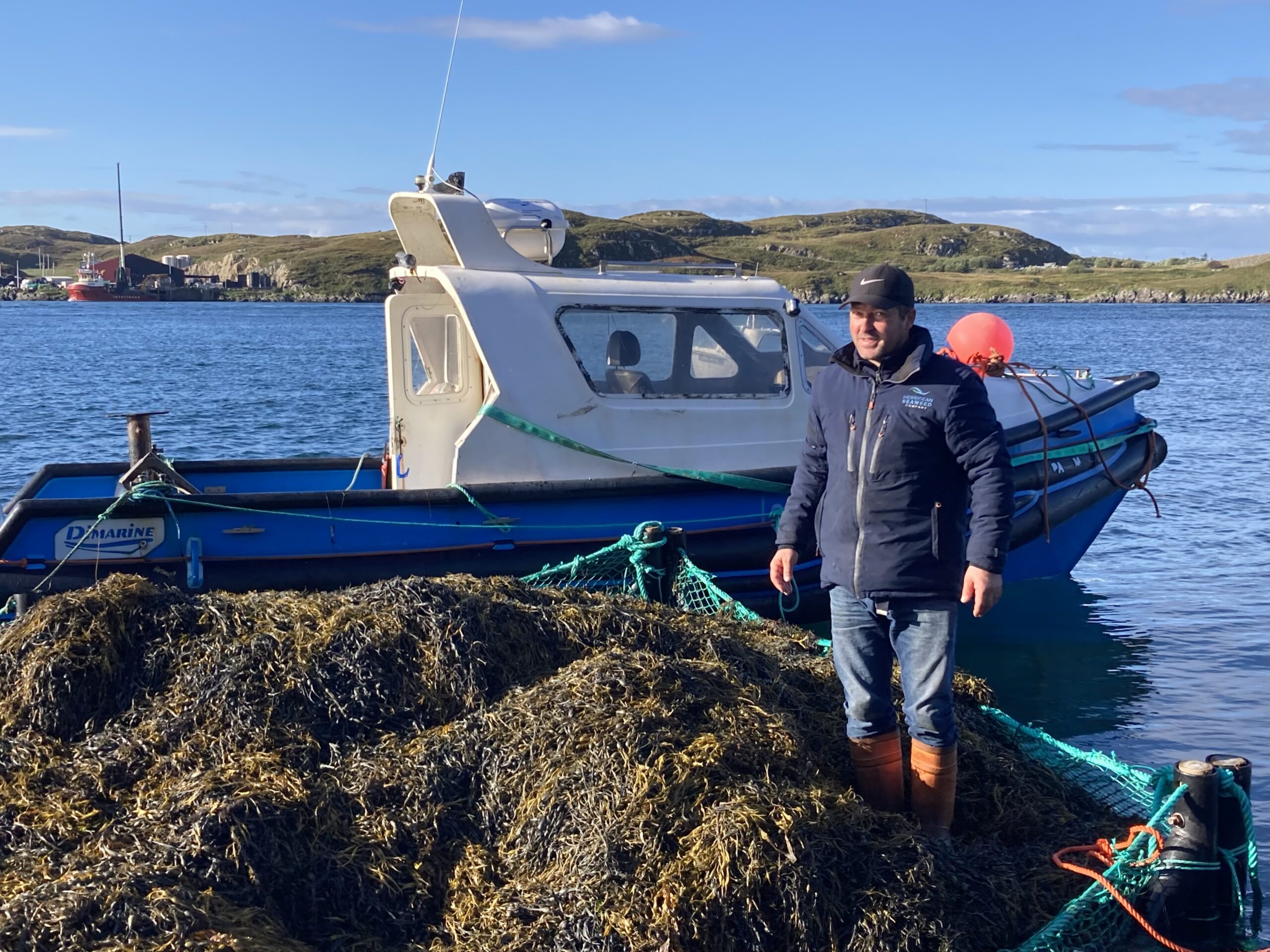
    We initially headed to the island of Scalpay which is now joined to Harris by a modern bridge. As we approached the bridge we were puzzled by the sight of a small vessel towing a strange bale of floating vegetation. All was revealed when the boat docked at a slipway under the bridge where we were taking photos. We then met Kenny who explained that the bale was comprised of seaweed which would be liquidised and sold worldwide as plant feed, particularly for citrus fruit.

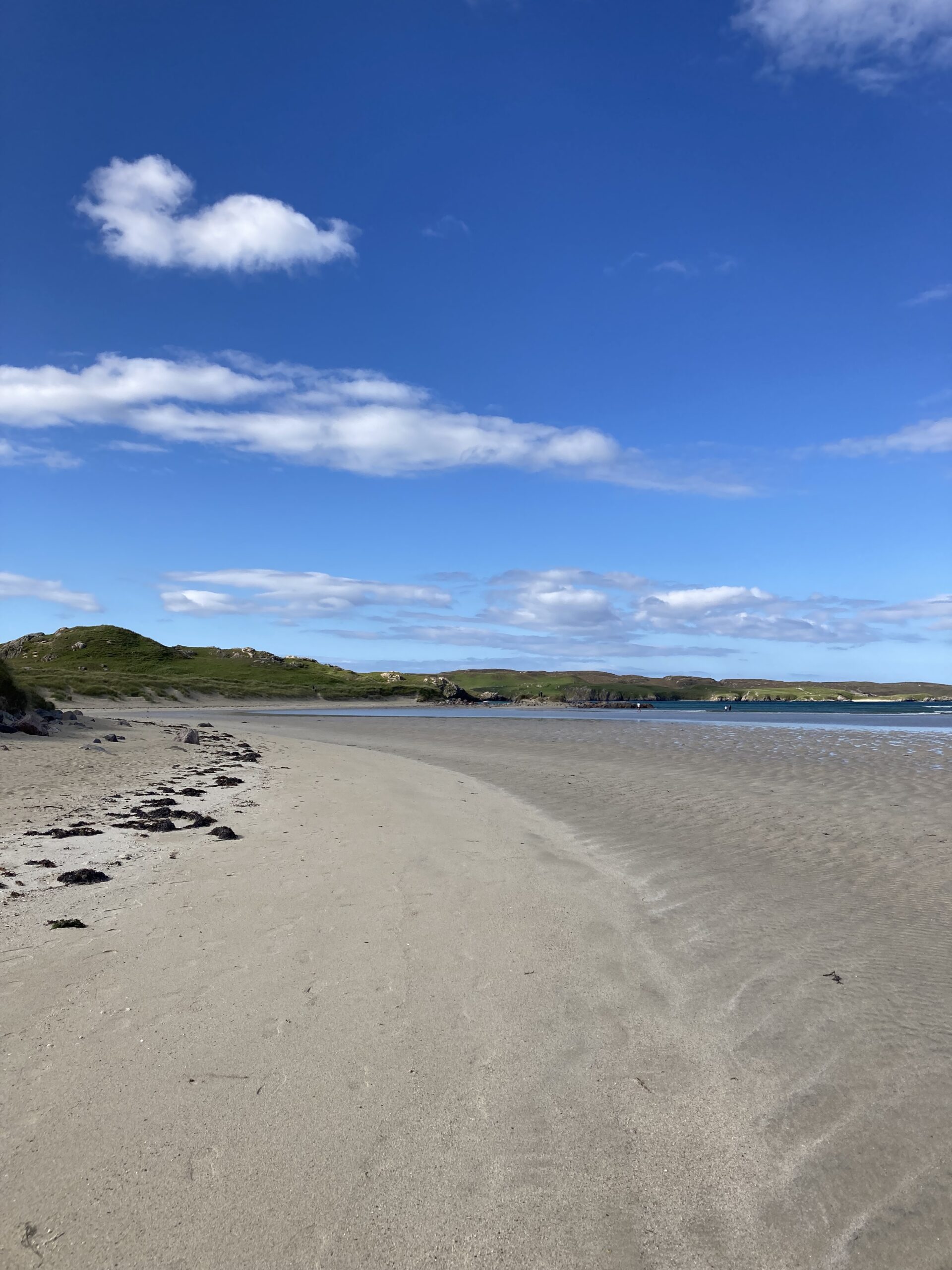
    Next task was to ride through the stunning mountains of North Harris over the ‘border’ and into Lewis. We passed the highest peak, An Clisham, which I remember climbing about eight years ago. After about thirty miles on fast yet quiet roads we turned South West and headed into the remote area where Uig is located. Concentration is key to getting where you want to go on the single track roads of Scotland. Gravel, sheep, sharp bends and big drops are features of many. But soon we were approaching the magnificent Uig estuary and its wild beach facing out into the Atlantic. 

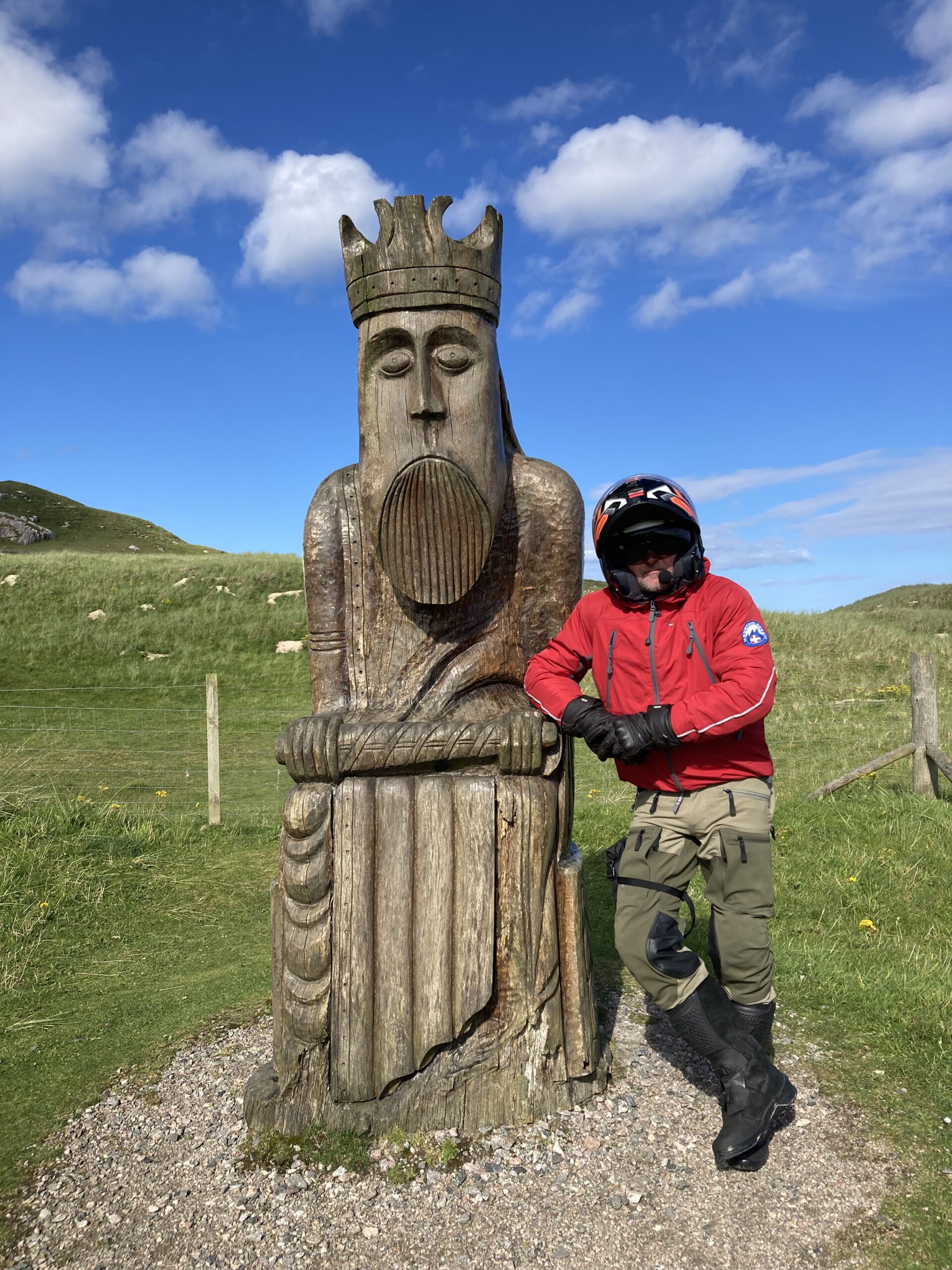
    It’s near here that the famous Lewis chessmen were discovered in 1831. This distinctive set of chess pieces were carved from Walrus ivory in the 12th century and most of the originals are now housed in the British Museum. There are various massive replicas and carvings dotted around for us tourists to get selfies with!

    Close to Uig is the Abhainn Dearg distillery which was established in 2008 by Mark Tayburn and produces the first legal whisky in the Outer Hebrides for almost two hundred years. This is the most Westerly of all the Scottish distilleries and we paid it a quick visit.

    Riding to the distillery

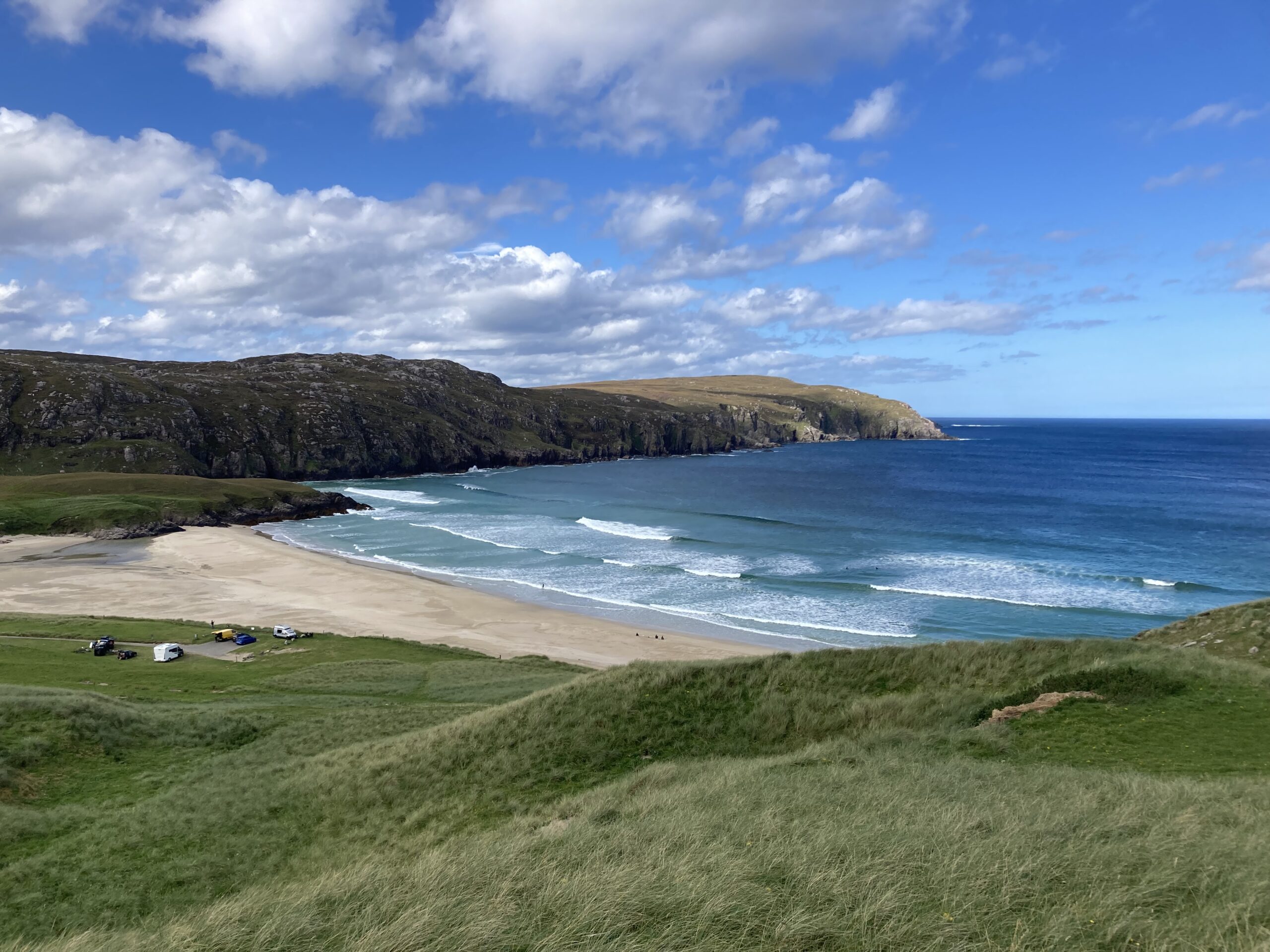
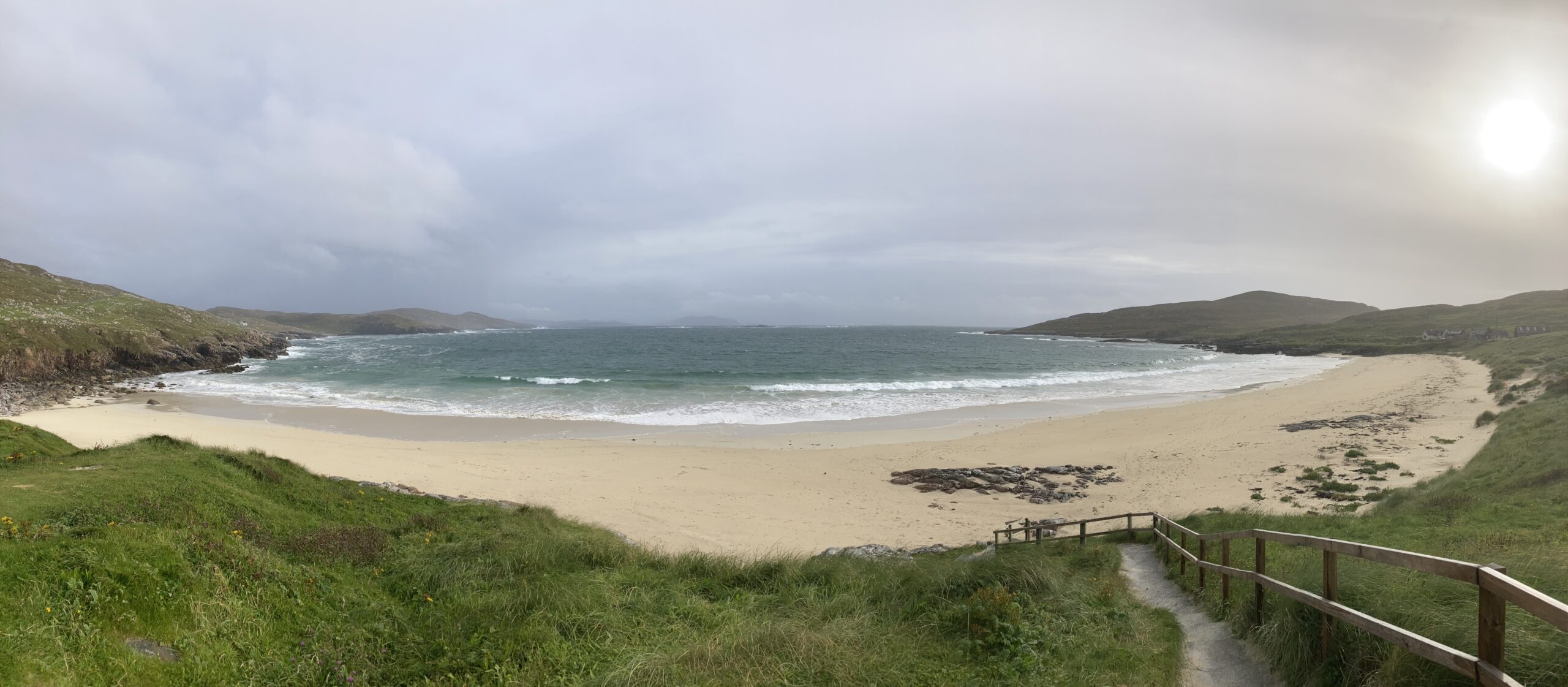
    We rode the narrow coast road around the Valtos and Kneep headland where Lizzie and I have stayed several times. The beaches here are reminiscent of the Caribbean and the machair grassland is home to beautiful and often rare wild flowers.

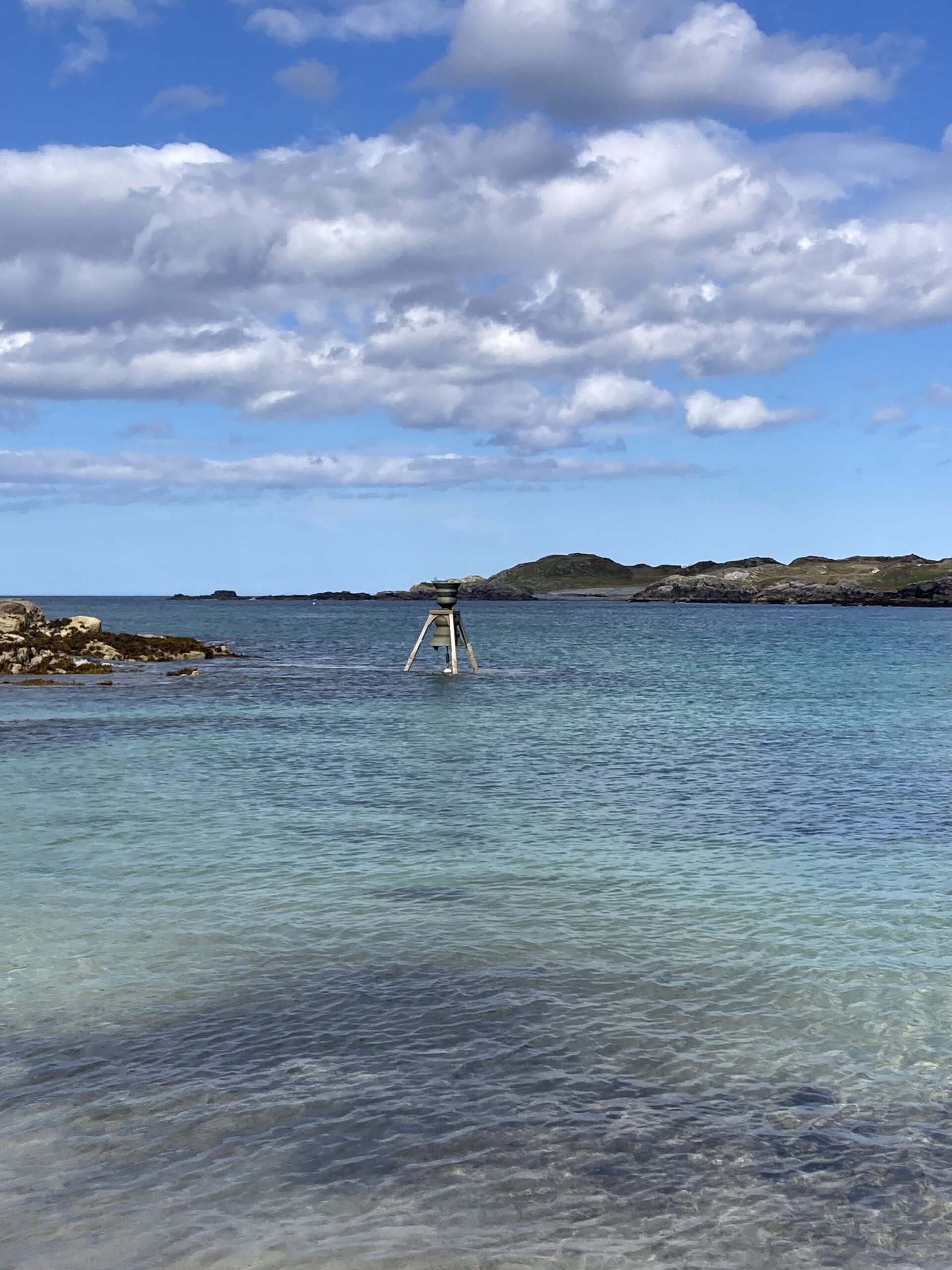
    I really wanted to visit the island of Great Bernera and as the weather was playing nicely, we detoured over the bridge linking it to Lewis and headed to Bostadh which is home to the site of a Bronze Age village and rebuilt dwelling. There’s also a fine beach with a strange semi submerged ‘tidal bell’ which was sculpted by Marcus Vergette and Neil McLachlan in 2010.

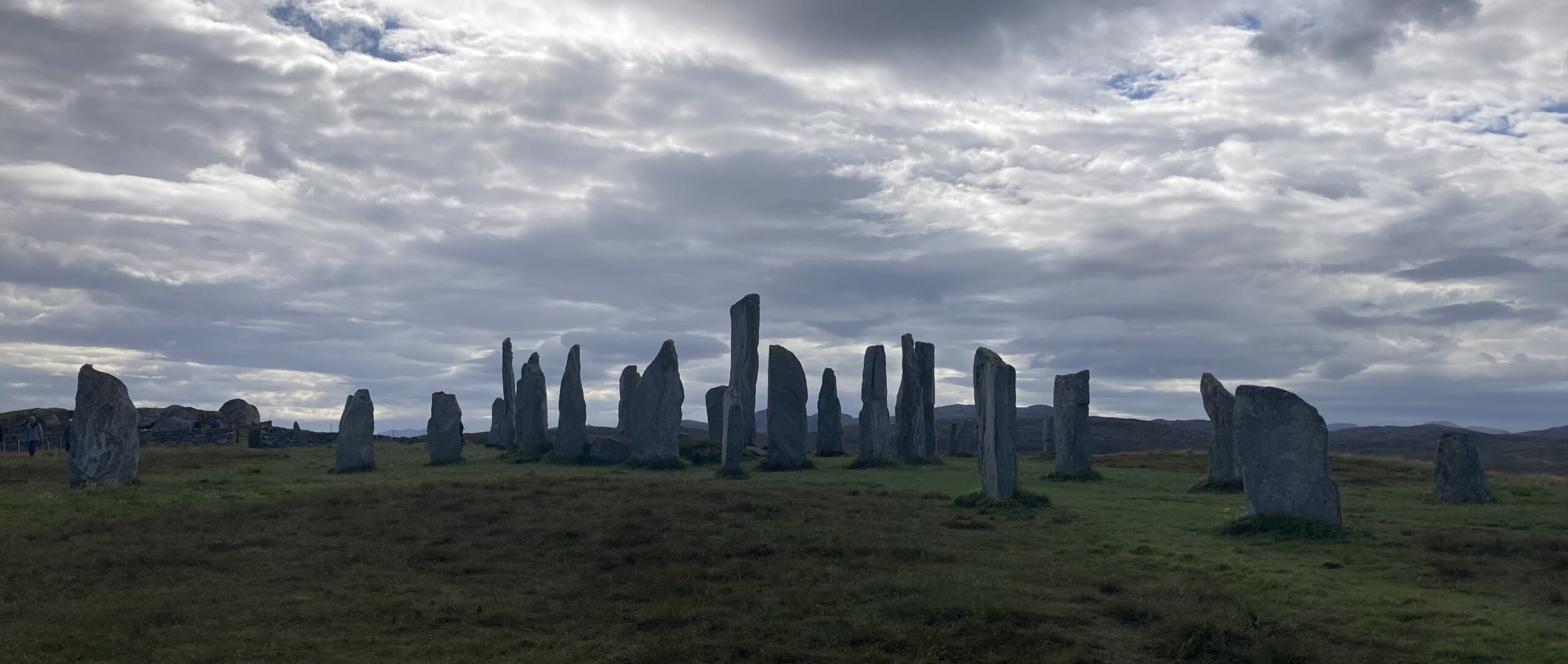
    We grabbed a quick lunch with the hard working ladies at Breaclete’s Community Centre before heading off to another must see highlight, the world renowned Callanish standing stones, probably erected around 5000 years ago.

    We had twenty minutes here, regarding with awe the massive stones that, like icebergs, hide more than they show. We really didn’t have time now to go to the furthest point North at Ness but I really wanted to show Andy the site of possibly the last major tragedy of World War One before meeting our friends at Hebrides MRT.

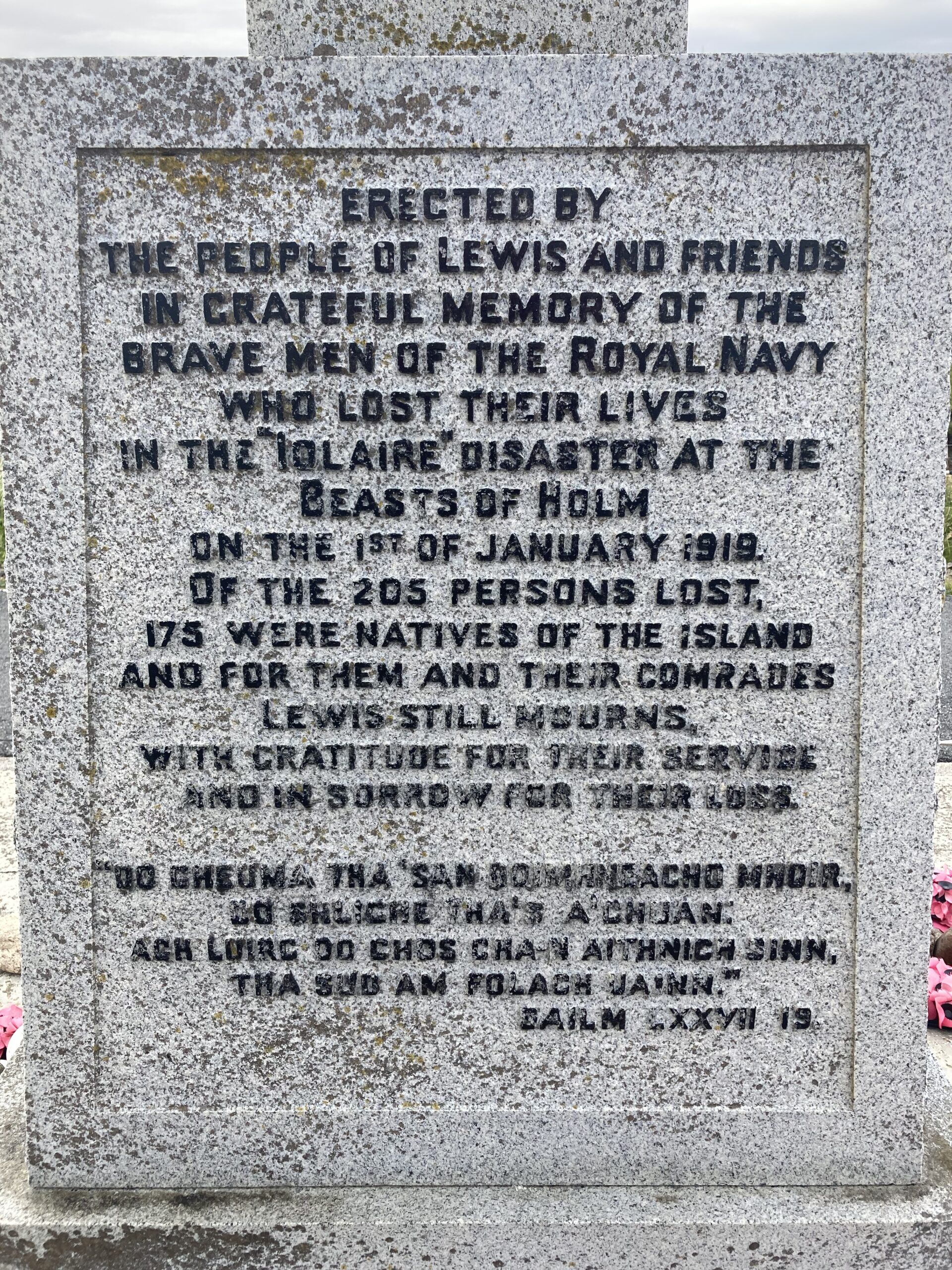
    Returning home after the 1914-18 conflict on New Years Day 1919, two hundred and one men were drowned when the naval yacht Iolaire struck rocks at Holm, a mere 20 yards from the shoreline. Thrown into the angry foam of a dark, gale blown sea, just 79 of the ships occupants miraculously survived. This was a monumental tragedy for the island and Stornaway in particular where virtually every family experienced a bereavement.

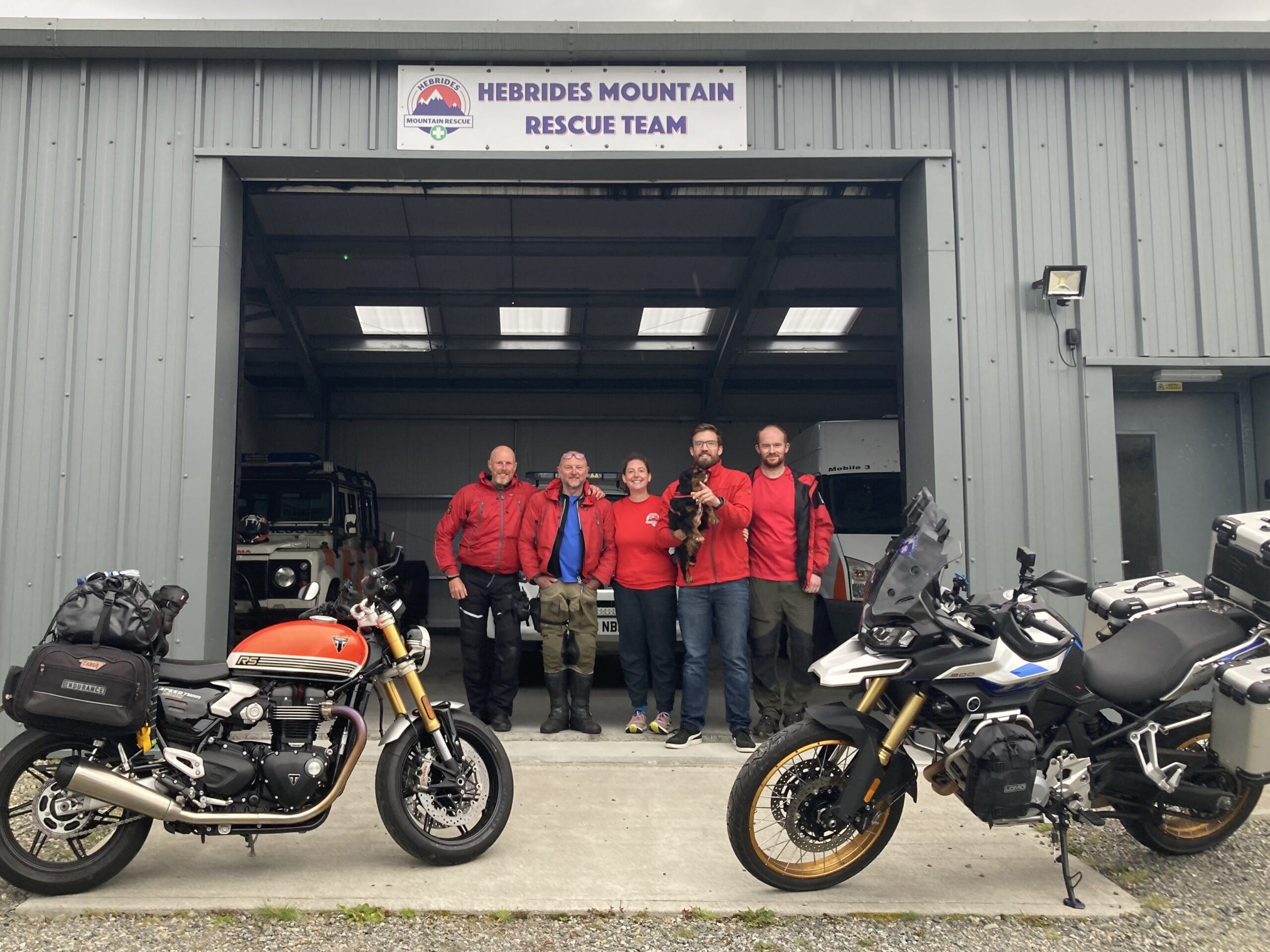
    After the sobering visit to Iolaire’s memorial, we now headed back through Stornoway and the happy prospect of meeting some of the Hebrides MRT at their fine and recently built base. On arrival, Rosemary greeted us like old friends and we soon had a brew in our hands and were talking shop. Soon afterwards, Michael rocked up on a vintage Honda VT500 which Andy and I were all over like a rash! A few minutes later we were joined by Fraser, the team’s equipment officer and his delightful, one eyed spaniel.

    The hospitality we received from this tight knit and isolated team was of epic proportions! We were invited to stay the night at the comfortable base which we gratefully accepted. We talked about all things MRT and Hebrides related for an hour and then the fantastic folk left us to dry kit, relax, eat and rest up for the huge and daunting day five ahead.

    Rosemary had left bread and other goodies so we made toast for tea and enjoyed the first of several brews. She’d told us to take more food with us but regretfully we had no space in our panniers so left it to feed the team!

    We can’t thank Hebrides MRT enough and look forward to future meet ups.


    Hebrides MRT operates throughout the whole of the remote Outer Hebrides, ranging from Barra in the south to Lewis in the north. The team is based in the town of Stornoway on Lewis, providing immediate access to the hills of Harris and Lewis. 

    The team is made up of 25 volunteers, who give up their time to train and help those in need in urban, hill and moorland environments. Team members are trained in mountain skills with the addition of search management techniques, communications, advanced first aid, advanced rigging and off-road and ATV driving. 

    The team responds to a diverse range of incidents ranging from overdue walkers and crag fast climbers to missing persons and animal rescues. 

    hebmrt.org 

  • LWR day four

    We awoke in our respective tents to the unwelcome sound of rain but managed to pack up quickly and were soon on the ferry to Tarbert on the Isle of Harris. There was time to write up the previous days blog AND sample a famous CalMac breakfast before riding off to make a first stop at the Isle of Harris distillery to update the website.

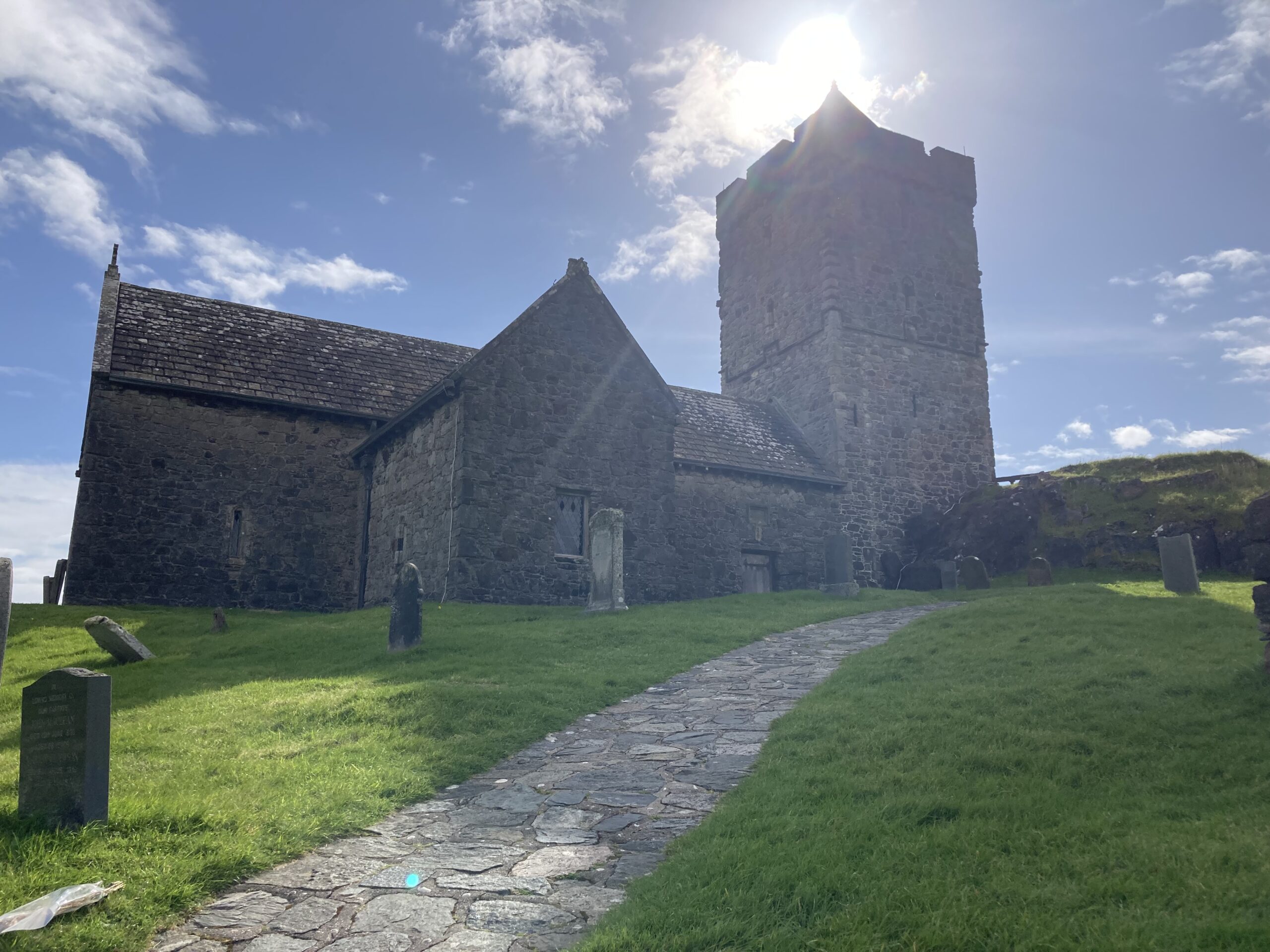
    There were no base visits planned for the day. Instead, we became tourists on this jewel of the Outer Hebrides and were soon marvelling at the beauty of Luskintyre and its famous beach. We met Steven, a volunteer Coastguard team member and swapped search and rescue stories before heading South past Horgabost to shelter from a heavy shower in the Bothy cafe in Leverburgh. After a brew, we made a cultural visit to the remarkable church at Rodel with its medieval tombs.

    Andy was amazed by this part of Harris. The scenery is almost lunar and the single track roads wind in and out of rocky outcrops and tiny settlements. Concentration was needed on the bikes in order not to cross the loose gravel at any angle of lean!

    The weather started to turn really nasty in the early afternoon with squally rain soaking us and blasts of wind knocking the bikes around. Despite being two tough and leathery old outdoor types, we unashamedly decided to bottle out of a second nights camping and found beds at the comfortable Backpacker’s Stop hostel in Tarbet as recommended by Steven earlier in the day.

    Once we’d dumped some gear in the dormitory, I persuaded Andy to ride with me to Hushinish, a thirty mile journey to see where the North Harris eagle observatory is located and visit the beach at the road’s end. We passed the old whaling station on the way back, a reminder of grimmer times on Harris. The squalls continued and we were two soaked bikers by the time we made it back to Tarbet.

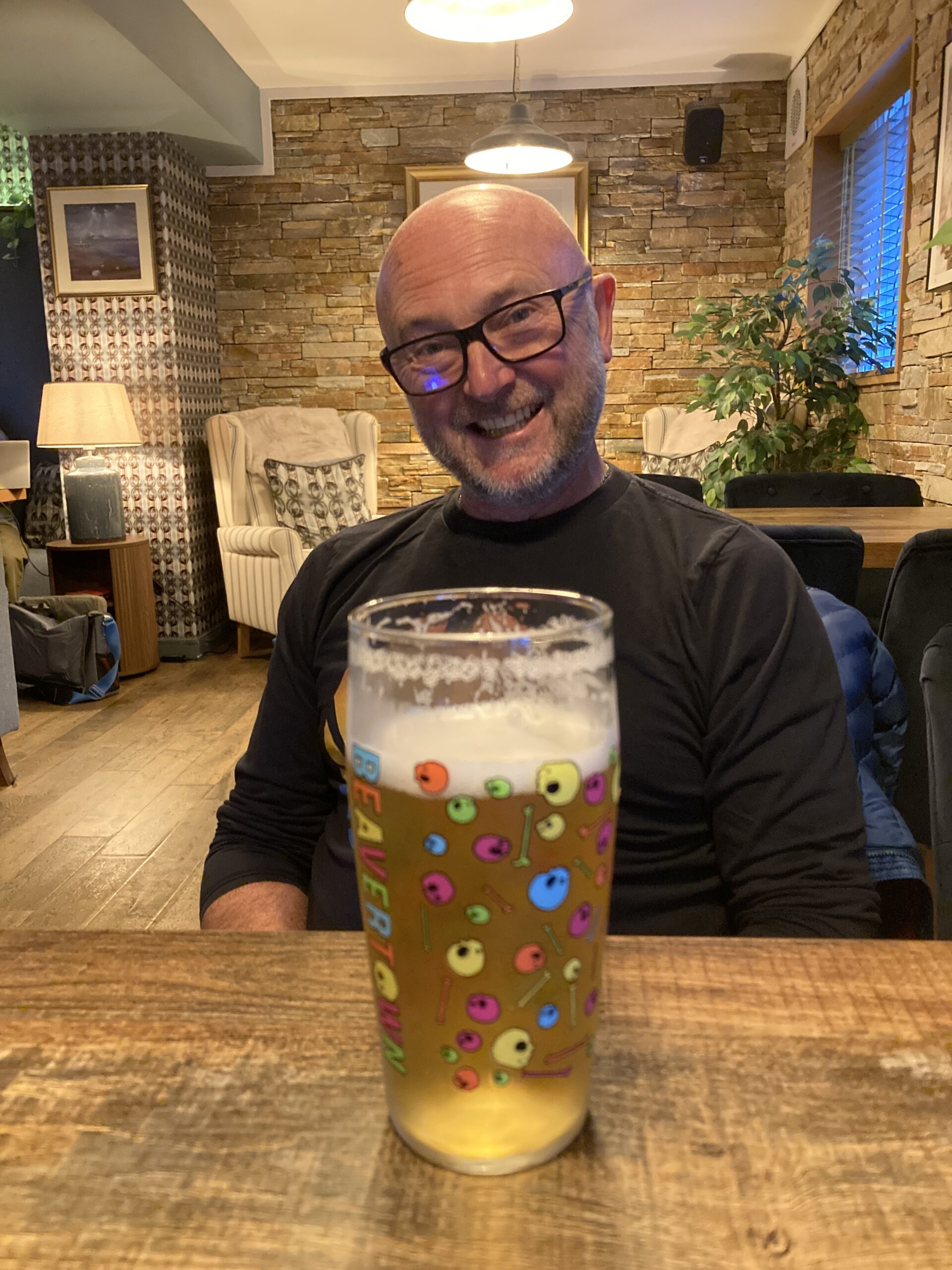
    We treated ourselves to a bowl apiece of delicious Cullen Skink in the Hotel Hebrides bar along with a couple of cheeky IPA’s before retiring to the hostel common room and some banter with a trio of Dutch gents on a walking holiday.

    The next day would involve travelling up through North Harris and neighbouring Lewis and resuming the quest to visit MRT bases…